Here is Lesson 4 - "Watering and Mowing" in our Lawn Challenge Series from the University of Illinois. terry
"Watering Lawns the Right Way
How much water does a lawn need? In general, cool-season grasses need about one to 1.5 inches of water per week is needed to maintain green color and active growth, and naturally slow down in growth and may go dormant in hot weather. Factors such as the soil, weather, and management practices all have a role in water needs of lawns. Here are a few general rules to follow:
* Decide before summer to either water lawns consistently as needed throughout the season, or let lawns go dormant as conditions turn warm and dry. Do not rotate back and forth. In other words, don't let the grass turn totally brown, apply enough water to green it up, and then let the grass go dormant again, as breaking dormancy actually drains large amounts of food reserves from the plant.
* When is it time to water? The first few warm days of summer does not automatically mean to water lawns. In fact, allowing lawns to start to go under mild drought stress actually increases rooting. Watch for footprinting, or footprints remaining on the lawn after walking across it (instead of leaf blades bouncing back up). Grasses also tend to turn darker in color as they go under drought stress. Sampling the root zone soil could be another option.
* In general, water as infrequently as possible. Water thoroughly so moisture gets down to the depth of the roots. Exceptions to this general rule would be for newly seeded lawns where the surface needs to stay moist, newly sodded lawns that have not yet rooted into the soil of the site, or when summer patch disease is a problem. Otherwise, avoid frequent waterings that promote shallower root systems and weeds (e.g., crabgrass).
* Given a choice, water early in the day when lawns are normally wet from dew. Avoid midday due to evaporation, and at night due to potential increased chances of some diseases.
* Spread the water uniformly across the lawn. Sprinklers vary in distribution patterns, and require spray overlap for uniform coverage. Placing coffee cans or similar straight-sided containers on the lawn can help measure water application rates. Avoid flooding areas, or missing other spots. On heavy clay soils and slopes, watch for excessive runoff; it may be necessary to apply the water in two applications to assure it soaks in.
* To help conserve water use, mow higher, avoid excess nitrogen as warm weather approaches, limit traffic over the lawn, improve turf rooting, control thatch and soil compaction, and avoid pesticide use on drought stressed lawns.
Importance of Proper Mowing
Although often overlooked, mowing has a major impact on lawn appearance and health. Follow a few simple guidelines to assure lawns are mowed properly:
* Don't make the common mistake of mowing too short. For most lawns in northern Illinois, a mowing height between two and three inches is suggested; with the upper range best for summer. Lawns mowed at higher heights tend to have deeper roots, less weed problems, and look much better. Mowing too close invites problems such as weed invasions. Simply raising the mowing height can have a major impact on the quality of many home lawns. A mowing height of two inches would be fine when grasses are rapidly growing, but the height should be raised as growth slows, stress increases, and when the lawn is in the shade.
* Base mowing frequency on the rate your lawn is growing. Do not remove more than one-third of the grass leaf in any one cutting. Mowing on a regular basis as the lawn needs it is essential. Don't mow when the grass is wet.
* As long as the lawn is mowed on a regular basis and the clippings readily filter back down into the lawn, clippings do not need to be collected. Returned in this manner, clippings readily decompose (contain 75 - 80 percent water) and do not cause thatch (thatch is discussed later in Thatch and Lawn Renovation). Clippings also recycle nutrients, in particular nitrogen, so less fertilizer is needed.
* Selecting a mower can involve a number of factors, many being personal preference. A study at the University of Illinois showed mulching mowers did not provide any additional benefit over conventional rotary mowers returning clippings, assuming proper mowing frequency and lawn fertilizing was followed. Regardless of the type of mower, blades need to be kept sharp.
* Mow in the direction that is safest. Periodically change directions if desired, although mowing the same direction each time should not be a problem on taller grass of home lawns."
Tuesday, October 31, 2006


Monday, October 30, 2006
Lawn Challenge Course - Lesson 3
Here is Lesson 3 - "Sodding and Seeding" in our Lawn Challenge Series from the University of Illinois. terry
"Seeding and Sodding Lawns.
Site Preparation
Whether seeding or sodding, home lawn quality is closely tied into how well the soil and site were prepared prior to lawn establishment. Taking shortcuts often comes back to haunt the homeowner in the form of chronic lawn problems, such as thatch, weeds, and disease.
Eliminating weed problems existing on the site is an important first step. Perennial weeds, such as quackgrass, need to be controlled prior to seeding or sodding the lawn. One option is to dig them out by hand, making sure roots and stems are completely removed. Another option is to use a translocated (moves within plant) nonselective herbicide, such as glyphosate (sold as Roundup and other trade names). Glufosinate ammonium (Finale) does not translocate, so may only provide limited control of perennial weeds. Both herbicides don't leave active soil residues that would harm seedlings. Read, understand, and follow all label directions.
Another important step in preparing for lawn establishment is to thoroughly work the soil (by rotary tiller) before seeding or sodding. Amend poor soils, such as heavy clay, by adding organic matter. Sources include compost, rotted manure, peat, and quality topsoil. Incorporate these materials into the existing soil, rather than layering them on the surface. Sand is not suggested as a material to improve clay soils for home lawns. Six inches or more of well prepared soil is suggested.
Soil testing is also suggested prior to establishment. Check with your local Cooperative Extension Office on how to get a soil test. Key information revealed by soil testing includes soil pH and amount of available nutrients such as phosphorus (P) and potassium (K). If major modifications are needed, it is easier to make these prior to establishing the lawn and lawns will get off to a better start when soils are modified prior to establishment. Lawn grasses prefer soil pH values between 6.0 and 7.0 (slightly acidic).
Lower soil pH (make more acidic) by adding elemental sulfur. Raise soil pH (make more alkaline) by adding limestone. Only add these materials when soil tests indicate a need and base the rate on soil test results. Starter fertilizers may also be mixed into the soil surface prior to lawn establishment. Starter fertilizers typically have balanced ratios of nitrogen, phosphorus, and potassium (N, P, K), such as 10-10-10 or 12-12-12. Soil test results may reveal nutrient shortages which would influence how much starter fertilizer is needed.
When preparing the soil, it's important to establish a favorable final grade. Rough grading should include removal of any rocks or other debris. Avoid burying any construction debris, as this could cause problems for the grass later. Eliminate any depressions or raised areas. Final slopes should be one to two percent away from buildings (one to two feet drop per 100 feet of run) to assure good surface drainage.
Seeding & Sodding Lawns
Once the site is prepared and the proper grasses have been chosen, it's time to plant the lawn. Deciding whether to seed or sod involves a number of factors, as outlined below. Assuming planting is done properly, the end result of a healthy lawn should be the same whether establishing via seeding or sodding.
Comparing Seeding and Sodding Home Lawns
Advantages of Seeding
* Large choice of species and cultivars to use
* Less expensive
* Lawn develops on site
Disdvantages of Seeding
* Longer period to wait for useable lawn
* Greater chance of weed invasions & erosion
* Relatively short favorable time for establishment
* May need to reseed
Advantages of Sodding
* 'Instant' lawn
* Fewer weed invasions
* Longer favorable time for establishment
* Less erosion problems
Disdvantages of Sodding
* Expensive
* Less choice in species and varieties
* Potential soil incompatibility problems
* Rooting speed varies
Timing is critical to assure success when seeding lawns. Mid August to early September is the ideal time for seeding lawns in northern Illinois. April would be a second choice. Seeding in late spring through mid-summer often leads to problems. Suggested seeding rates are found below. Exceeding rates may result in weak, spindly seedlings and potential disease development. Newly seeded grasses must receive adequate moisture to assure germination and early seedling survival. Putting down a light straw mulch can help prevent rapid drying and helps keep the soil in place until the grass is established. Use about one bale per 1,000 square feet.
When sodding, purchase quality sod that has been freshly cut. Try to use sod that has been grown on a similar type of soil as exists on the site; most of northern Illinois has mineral soils so try to get sod grown on mineral soil. Install promptly. Stagger edges in a similar pattern as laying bricks. Avoid stretching sod or gaps between pieces of sod.
New sod should be watered thoroughly after installation, and then frequently until the sod is established. Water should go down through the sod to moisten the soil underneath for good root development. Mow newly sodded lawns on a regular basis so that no more than one third of the grass height is removed in a single mowing. A height between two and three inches is suggested. Core aerify a sodded lawn after the sod has firmly rooted to the soil. Don't fertilize newly sodded lawns until the next suggested time in the normal fertilizing schedule; details on these and other lawn care practices are discussed in other lessons of the Lawn Challenge.
Suggested Seeding Rates for Lawn Grasses
Species in Seed Mix Rate (pounds/1,000 sq.ft.)
Kentucky bluegrass 1 to 3
Kentucky bluegrass/perennial ryegrass 3 to 4
Kentucky bluegrass/fine fescue 3 to 5
Tall fescue 6 to 9"
"Seeding and Sodding Lawns.
Site Preparation
Whether seeding or sodding, home lawn quality is closely tied into how well the soil and site were prepared prior to lawn establishment. Taking shortcuts often comes back to haunt the homeowner in the form of chronic lawn problems, such as thatch, weeds, and disease.
Eliminating weed problems existing on the site is an important first step. Perennial weeds, such as quackgrass, need to be controlled prior to seeding or sodding the lawn. One option is to dig them out by hand, making sure roots and stems are completely removed. Another option is to use a translocated (moves within plant) nonselective herbicide, such as glyphosate (sold as Roundup and other trade names). Glufosinate ammonium (Finale) does not translocate, so may only provide limited control of perennial weeds. Both herbicides don't leave active soil residues that would harm seedlings. Read, understand, and follow all label directions.
Another important step in preparing for lawn establishment is to thoroughly work the soil (by rotary tiller) before seeding or sodding. Amend poor soils, such as heavy clay, by adding organic matter. Sources include compost, rotted manure, peat, and quality topsoil. Incorporate these materials into the existing soil, rather than layering them on the surface. Sand is not suggested as a material to improve clay soils for home lawns. Six inches or more of well prepared soil is suggested.
Soil testing is also suggested prior to establishment. Check with your local Cooperative Extension Office on how to get a soil test. Key information revealed by soil testing includes soil pH and amount of available nutrients such as phosphorus (P) and potassium (K). If major modifications are needed, it is easier to make these prior to establishing the lawn and lawns will get off to a better start when soils are modified prior to establishment. Lawn grasses prefer soil pH values between 6.0 and 7.0 (slightly acidic).
Lower soil pH (make more acidic) by adding elemental sulfur. Raise soil pH (make more alkaline) by adding limestone. Only add these materials when soil tests indicate a need and base the rate on soil test results. Starter fertilizers may also be mixed into the soil surface prior to lawn establishment. Starter fertilizers typically have balanced ratios of nitrogen, phosphorus, and potassium (N, P, K), such as 10-10-10 or 12-12-12. Soil test results may reveal nutrient shortages which would influence how much starter fertilizer is needed.
When preparing the soil, it's important to establish a favorable final grade. Rough grading should include removal of any rocks or other debris. Avoid burying any construction debris, as this could cause problems for the grass later. Eliminate any depressions or raised areas. Final slopes should be one to two percent away from buildings (one to two feet drop per 100 feet of run) to assure good surface drainage.
Seeding & Sodding Lawns
Once the site is prepared and the proper grasses have been chosen, it's time to plant the lawn. Deciding whether to seed or sod involves a number of factors, as outlined below. Assuming planting is done properly, the end result of a healthy lawn should be the same whether establishing via seeding or sodding.
Comparing Seeding and Sodding Home Lawns
Advantages of Seeding
* Large choice of species and cultivars to use
* Less expensive
* Lawn develops on site
Disdvantages of Seeding
* Longer period to wait for useable lawn
* Greater chance of weed invasions & erosion
* Relatively short favorable time for establishment
* May need to reseed
Advantages of Sodding
* 'Instant' lawn
* Fewer weed invasions
* Longer favorable time for establishment
* Less erosion problems
Disdvantages of Sodding
* Expensive
* Less choice in species and varieties
* Potential soil incompatibility problems
* Rooting speed varies
Timing is critical to assure success when seeding lawns. Mid August to early September is the ideal time for seeding lawns in northern Illinois. April would be a second choice. Seeding in late spring through mid-summer often leads to problems. Suggested seeding rates are found below. Exceeding rates may result in weak, spindly seedlings and potential disease development. Newly seeded grasses must receive adequate moisture to assure germination and early seedling survival. Putting down a light straw mulch can help prevent rapid drying and helps keep the soil in place until the grass is established. Use about one bale per 1,000 square feet.
When sodding, purchase quality sod that has been freshly cut. Try to use sod that has been grown on a similar type of soil as exists on the site; most of northern Illinois has mineral soils so try to get sod grown on mineral soil. Install promptly. Stagger edges in a similar pattern as laying bricks. Avoid stretching sod or gaps between pieces of sod.
New sod should be watered thoroughly after installation, and then frequently until the sod is established. Water should go down through the sod to moisten the soil underneath for good root development. Mow newly sodded lawns on a regular basis so that no more than one third of the grass height is removed in a single mowing. A height between two and three inches is suggested. Core aerify a sodded lawn after the sod has firmly rooted to the soil. Don't fertilize newly sodded lawns until the next suggested time in the normal fertilizing schedule; details on these and other lawn care practices are discussed in other lessons of the Lawn Challenge.
Suggested Seeding Rates for Lawn Grasses
Species in Seed Mix Rate (pounds/1,000 sq.ft.)
Kentucky bluegrass 1 to 3
Kentucky bluegrass/perennial ryegrass 3 to 4
Kentucky bluegrass/fine fescue 3 to 5
Tall fescue 6 to 9"
Sunday, October 29, 2006
Lawn Challenge Course - Lesson 2
Dealing with Shady Sites
Lawn Grass Options
Having a quality lawn in the shade can be a challenge. Lawns in shade areas are typically thin, weak, and of poor quality. In addition, lawns in shade areas generally do not have the ability to tolerate or recover from stress as compared to lawns growing in full sun. Start improving shade areas for grass growth by pruning trees and large shrubs as much as feasible to allow the maximum amount of light to reach the soil surface.
Significant shade such as this makes growing a quality lawn difficult.
Red fescue or other fine fescues are the primary lawn species in shade lawn mixtures. Among the more commonly used cultivars of the fine fescues are Jamestown, Banner, Barfalla, Checker, Highlight, Koket, Shadow (all chewings fescues); Dawson, Ensylva, Fortress, Pennlawn, and Ruby (creeping red fescues); and Aurora, Biljart(C-26), Reliant, Scaldis, and Waldina (hard fescues). Perennial ryegrass and tall fescue offer intermediate shade tolerance. Perennial ryegrass cultivars for shade include Birdie II, Citation II, Fiesta II, Manhatten II, Palmer,and Regal. Tall fescues best for shade include Falcon, Finelawn, Houndog, Jaguar, Olympic, Rebel,and Rebel II.Kentucky bluegrass generally does poor in the shade, but some shade tolerant cultivars include Bensun, Bristol, Eclipse, Glade, Nugget, Touchdown,and Victa.
After establishment, care of established lawns in shade areas is different than lawns located in full sun. Mow higher (near 3 inches), and fertilize less in the shade, as too much nitrogen can be detrimental to shade lawn species. About one to two pounds of actual nitrogen per 1,000 square feet per growing season is all that is needed. When watering shade lawns, do so as infrequently as possible, and water deeply. Reduce traffic over lawns in the shade.
If these practices have been followed but the lawn still fails, there probably is not enough light, even for a shade tolerant grass species. Shade tolerant grasses still need an acceptable amount of light to grow. Lawns in the shade often have problems with moss (discussion follows) or shade-loving broadleaf weeds (see Lesson 6-Weed Problems in Lawns). Ground ivy, or creeping charlie, is a prime example. These problems exist primarily because the lawn grasses are thin and weak, allowing easy invasion. Follow the steps outlined above to help avoid these problems. Another option is to try a shade tolerant groundcover, as discussed below.
Groundcover Options
There are a variety of groundcovers available for shade areas. Shade groundcovers may offer an alternative to turfgrasses in shade areas, but are not foolproof. Poor soil drainage can cause problems for several species. Some maintenance is also needed to keep the planting looking good. The following list outlines some of the better groundcover choices for shade areas. Common names are provided, followed by Latin names.
.Goutweed
Aegopodium podagraria 'Variegatum'
Persistent, weedy groundcover that spreads via underground rhizomes. Tolerates many soil conditions, deep shade to full-sun, although foliage may scorch in full-sun. Best to plant in contained areas to avoid becoming evasive; cultivar 'Variegatum' more desirable.
Buglewood
.Buglewood
Ajuga reptans
Low-growing, attractive foliage, spreads via above ground stolons. Prefers moist, well-drained soils in heavy shade to full-sun; protect from winter winds. Cultivars vary in both flower and foliage color.
.Canada Wild Ginger
Asarum canadense
Forms foliage mass up to six inches tall, spreads rapidly via rhizomes. Excellent deciduous groundcover for partial to deep shade.
.Lily-of-the-Valley
Convallaria majalis
Forms thick carpet of upright leaves, spreads rapidly via rhizomes, very adaptable but does best in well-drained soils, partial to full shade. May crowd out delicate plants. Large quantities of roots and rhizomes are poisonous. Fragrant flowers are popular.
.Purpleleaf Wintercreeper Euonymus
Euonymus fortunei 'Colorata'
Trailing habit and roots readily into soil as it creeps along. Heavy shade to full-sun, prefers well-drained soils. Protect from winter winds. Scale can be a problem.
.Sweet Woodruff
Galium odoratum
Delicate deciduous groundcover that forms uniform mat of bright green, persistent foliage. Small, white flowers. Prefers moist, well-drained soils in medium to deep shade.
.Hosta, Plantain Lily
Hosta species
Large group of hardy, dependable plants with bold, decorative foliage forming neat, circular clumps. Plants spread slowly via short rhizomes. Adaptable, best in open shade. Some have showy, lily-like flowers. Leaf burn problems in sun. Slugs also are a common problem.
.Japanese Spurge
Pachysandra terminalis
Neat, uniform, evergreen groundcover that spreads via rhizomes to form dense mat. Best in shade, well-drained soils. Protect from winter winds; may have pest or disease problems if stressed.
.Common Periwinkle
Vinca minor
Trailing, vinelike evergreen groundcover that roots as it creeps along. Grows in fairly heavy shade to full-sun; although foliage tends to be deeper green and glossier in the shade. Protect from winter wind and sun. Disease problems occur with poor soil drainage and poor air movement.
.Barren Strawberry
Waldsteinia ternata
Forms mats of strawberry-like evergreen foliage with glossy, bright green leaves and yellow flowers. Easy to care for, plant in partial shade to full-sun.
.Woodland Natives
(various species)
A wide variety of woodland plants, such as ferns, Jack-in-the-Pulpit, and trilliums may also be used in areas where turf will not grow or is not desired. Consult with native plant specialists & nurseries.
Lawn Grass Options
Having a quality lawn in the shade can be a challenge. Lawns in shade areas are typically thin, weak, and of poor quality. In addition, lawns in shade areas generally do not have the ability to tolerate or recover from stress as compared to lawns growing in full sun. Start improving shade areas for grass growth by pruning trees and large shrubs as much as feasible to allow the maximum amount of light to reach the soil surface.
Significant shade such as this makes growing a quality lawn difficult.
Red fescue or other fine fescues are the primary lawn species in shade lawn mixtures. Among the more commonly used cultivars of the fine fescues are Jamestown, Banner, Barfalla, Checker, Highlight, Koket, Shadow (all chewings fescues); Dawson, Ensylva, Fortress, Pennlawn, and Ruby (creeping red fescues); and Aurora, Biljart(C-26), Reliant, Scaldis, and Waldina (hard fescues). Perennial ryegrass and tall fescue offer intermediate shade tolerance. Perennial ryegrass cultivars for shade include Birdie II, Citation II, Fiesta II, Manhatten II, Palmer,and Regal. Tall fescues best for shade include Falcon, Finelawn, Houndog, Jaguar, Olympic, Rebel,and Rebel II.Kentucky bluegrass generally does poor in the shade, but some shade tolerant cultivars include Bensun, Bristol, Eclipse, Glade, Nugget, Touchdown,and Victa.
After establishment, care of established lawns in shade areas is different than lawns located in full sun. Mow higher (near 3 inches), and fertilize less in the shade, as too much nitrogen can be detrimental to shade lawn species. About one to two pounds of actual nitrogen per 1,000 square feet per growing season is all that is needed. When watering shade lawns, do so as infrequently as possible, and water deeply. Reduce traffic over lawns in the shade.
If these practices have been followed but the lawn still fails, there probably is not enough light, even for a shade tolerant grass species. Shade tolerant grasses still need an acceptable amount of light to grow. Lawns in the shade often have problems with moss (discussion follows) or shade-loving broadleaf weeds (see Lesson 6-Weed Problems in Lawns). Ground ivy, or creeping charlie, is a prime example. These problems exist primarily because the lawn grasses are thin and weak, allowing easy invasion. Follow the steps outlined above to help avoid these problems. Another option is to try a shade tolerant groundcover, as discussed below.
Groundcover Options
There are a variety of groundcovers available for shade areas. Shade groundcovers may offer an alternative to turfgrasses in shade areas, but are not foolproof. Poor soil drainage can cause problems for several species. Some maintenance is also needed to keep the planting looking good. The following list outlines some of the better groundcover choices for shade areas. Common names are provided, followed by Latin names.
.Goutweed
Aegopodium podagraria 'Variegatum'
Persistent, weedy groundcover that spreads via underground rhizomes. Tolerates many soil conditions, deep shade to full-sun, although foliage may scorch in full-sun. Best to plant in contained areas to avoid becoming evasive; cultivar 'Variegatum' more desirable.
Buglewood
.Buglewood
Ajuga reptans
Low-growing, attractive foliage, spreads via above ground stolons. Prefers moist, well-drained soils in heavy shade to full-sun; protect from winter winds. Cultivars vary in both flower and foliage color.
.Canada Wild Ginger
Asarum canadense
Forms foliage mass up to six inches tall, spreads rapidly via rhizomes. Excellent deciduous groundcover for partial to deep shade.
.Lily-of-the-Valley
Convallaria majalis
Forms thick carpet of upright leaves, spreads rapidly via rhizomes, very adaptable but does best in well-drained soils, partial to full shade. May crowd out delicate plants. Large quantities of roots and rhizomes are poisonous. Fragrant flowers are popular.
.Purpleleaf Wintercreeper Euonymus
Euonymus fortunei 'Colorata'
Trailing habit and roots readily into soil as it creeps along. Heavy shade to full-sun, prefers well-drained soils. Protect from winter winds. Scale can be a problem.
.Sweet Woodruff
Galium odoratum
Delicate deciduous groundcover that forms uniform mat of bright green, persistent foliage. Small, white flowers. Prefers moist, well-drained soils in medium to deep shade.
.Hosta, Plantain Lily
Hosta species
Large group of hardy, dependable plants with bold, decorative foliage forming neat, circular clumps. Plants spread slowly via short rhizomes. Adaptable, best in open shade. Some have showy, lily-like flowers. Leaf burn problems in sun. Slugs also are a common problem.
.Japanese Spurge
Pachysandra terminalis
Neat, uniform, evergreen groundcover that spreads via rhizomes to form dense mat. Best in shade, well-drained soils. Protect from winter winds; may have pest or disease problems if stressed.
.Common Periwinkle
Vinca minor
Trailing, vinelike evergreen groundcover that roots as it creeps along. Grows in fairly heavy shade to full-sun; although foliage tends to be deeper green and glossier in the shade. Protect from winter wind and sun. Disease problems occur with poor soil drainage and poor air movement.
.Barren Strawberry
Waldsteinia ternata
Forms mats of strawberry-like evergreen foliage with glossy, bright green leaves and yellow flowers. Easy to care for, plant in partial shade to full-sun.
.Woodland Natives
(various species)
A wide variety of woodland plants, such as ferns, Jack-in-the-Pulpit, and trilliums may also be used in areas where turf will not grow or is not desired. Consult with native plant specialists & nurseries.
Saturday, October 28, 2006
Lawn Challenge Course _ Lesson 1
Here is the First in a new Series of 8 Lessons on Lawn Care from the University of Illinois. Check it out... terry
"Know Your Lawn Grass
Factors Involved in Choosing Lawn Grasses
Choosing the right grass is key to achieving an attractive lawn.
With the many lawn grasses described in gardening magazines and books, how do you choose which is best for lawns in northern Illinois? The choice depends largely on characteristics of the grass and the intended site for it to grow. Grasses vary in growth habit, appearance quality, ease and rate of establishment, maintenance needs, adaptability to shade, wear tolerance, ability to recover from damage, cold hardiness, susceptibility to pests and diseases, and other factors.
Consider a variety of factors when choosing a grass for your lawn, including:
How much light is available on the site? Full sun areas dictate use of different grasses than areas receiving shade from trees or buildings.
Are there problem areas within the site, such as slopes facing south or west (more heat stress), poor drainage, or heavily used areas (lots of traffic)?
What is the anticipated level of maintenance (fertilizing, watering, pest control) the lawn will receive? Grasses can be classified as high, medium, and low maintenance.
What standards of quality are desired? In general, high anticipated quality usually means higher maintenance requirements while fair to moderate anticipated quality usually calls for less maintenance.
What are the expected costs? In addition to the initial establishment costs, there are ongoing maintenance costs. Higher maintenance levels mean higher costs.
Ideally, all of these factors would be considered prior to putting in the lawn. However, reviewing these factors can also be useful when evaluating existing lawns that have chronic problems. Consider that the source of the problems may be the wrong grass for the site.
Unattractive lawns like this may be the result of using the wrong grass for the site.
Specific grasses are outlined in the following screens. Each species has a specific growth habit. Bunch-type grasses grow in clumps and spread very little via tillers from the base of the plant, so do not readily recover from damage or fill-in bare areas on their own. Other grasses either have rhizomes, stems that grow horizontally underground; or stolons, horizontal stems that grow above the soil surface. Grasses with either of these types of growth can readily fill-in adjoining bare areas and recover more readily when damaged."
"Know Your Lawn Grass
Factors Involved in Choosing Lawn Grasses
Choosing the right grass is key to achieving an attractive lawn.
With the many lawn grasses described in gardening magazines and books, how do you choose which is best for lawns in northern Illinois? The choice depends largely on characteristics of the grass and the intended site for it to grow. Grasses vary in growth habit, appearance quality, ease and rate of establishment, maintenance needs, adaptability to shade, wear tolerance, ability to recover from damage, cold hardiness, susceptibility to pests and diseases, and other factors.
Consider a variety of factors when choosing a grass for your lawn, including:
How much light is available on the site? Full sun areas dictate use of different grasses than areas receiving shade from trees or buildings.
Are there problem areas within the site, such as slopes facing south or west (more heat stress), poor drainage, or heavily used areas (lots of traffic)?
What is the anticipated level of maintenance (fertilizing, watering, pest control) the lawn will receive? Grasses can be classified as high, medium, and low maintenance.
What standards of quality are desired? In general, high anticipated quality usually means higher maintenance requirements while fair to moderate anticipated quality usually calls for less maintenance.
What are the expected costs? In addition to the initial establishment costs, there are ongoing maintenance costs. Higher maintenance levels mean higher costs.
Ideally, all of these factors would be considered prior to putting in the lawn. However, reviewing these factors can also be useful when evaluating existing lawns that have chronic problems. Consider that the source of the problems may be the wrong grass for the site.
Unattractive lawns like this may be the result of using the wrong grass for the site.
Specific grasses are outlined in the following screens. Each species has a specific growth habit. Bunch-type grasses grow in clumps and spread very little via tillers from the base of the plant, so do not readily recover from damage or fill-in bare areas on their own. Other grasses either have rhizomes, stems that grow horizontally underground; or stolons, horizontal stems that grow above the soil surface. Grasses with either of these types of growth can readily fill-in adjoining bare areas and recover more readily when damaged."
Lance Walheim Tips: Weed-Free Lawn
| Watering, mowing, fertilizing, and spraying your lawn to keep it weed-free. | |
10 Simple Steps to Ecological Lawn Care
Check out this Article from Natural Life Magazine: terry
"Ten Simple Steps to Ecological Lawn Care
So you want to avoid using chemical pesticides, but still want a healthy lawn? Citizens for Alternatives to Pesticides (CAP) provides four routine lawn care steps, then six seasonal steps to ecological lawn care.
We are all familiar with Reduce Re-use and Recycle. Now we must Re-think too. Let's re-think our expectations of lawns. The “golf-course syndrome” causes us to have unrealistic ideals of a 100 percent weed-free lawn. (What will we want next?: a cloud-free sky?) Let's accept occasional weeds as a sign of a normal, non-toxic lawn. Quick-fix chemical solutions carry a much-too-heavy health and environmental price. Prevention is better than cure. Try these ten easy steps to prove it.
Routine Care
1. Mow high. If you only apply one of these ten steps this year, let this be it! A lawn mowed high discourages weed and insect invasion. Set cutting height at 2.5 or three inches. Never scalp your lawn. Long grass blades stay much stronger, prevent weeds from sprouting, shade the roots and prevent drying of soil, and encourage longer, healthier roots. Mow regularly, never removing more than one-third of the leaf length at a time. Keep cutting blades sharp. This avoids tearing grass and making it susceptible to disease. Don't mow wet grass, and mow in the evening or on cloudy days.
2. Mulch clippings. Leave clippings on the lawn as mulch. This reduces the need for organic fertilizer by 30 percent. In wet periods, or if grass was very long, compost clippings instead. If you are detoxifying a previously chemically-treated lawn, don't mulch for a year or two or thatch may build up.
3. Water deeply. Lawns need about one inch of water once a week, applied slowly during dry spells, preferably before 8 AM. Put a can under the sprinkler and time how long it takes for an inch to accumulate. That's how long to allow before moving the sprinkler each time. Frequent, light sprinklings waste water and encourage shallow roots.
4. Control weeds and insects ecologically. A healthy, well-cared for lawn out competes most weeds. Check often for stressed areas like bare spots (they invite weed invasion) and treat promptly by eliminating the cause (such as heavy traffic). Overseed when necessary (see step 9.) Remove occasional weeds by hand. For persistent weed problems, get your soil professionally analyzed: ideal soil pH is six to seven. Add lime or sulfur to modify pH. This increases availability of plant nutrients and promotes beneficial micro-organisms. Dishwashing soap and water sprayed in warm weather is effective against most insect pests.
Seasonal Care
5. Rake. Use a rake to gently remove thatch (compacted layer of clippings and dead grass which prevents water from percolating to the roots). Do this in late spring or early summer. Don't act too soon after the thaw when the grass still feels spongy, or else the roots will be damaged, but don't wait so late that heavy seeder weeds have germinated.
6. Fertilize in spring. Many people will find this step unnecessary, and some experts recommend fall fertilization only. But if you want a really strong and pest-resistant lawn, apply (in mid-May) slow-release, granular, organic fertilizer. Don't use highly-soluble chemical ones, which leach natural soil nutrients, stress the soil and grass, and may induce disease outbreaks. Organic fertilizers include compost, manure, processed sewage, top dressing, rock mineral fertilizer, bone meal, blood meal and kelp.
7. Aerate. Aeration is the process of removing small plugs of earth to decrease soil compaction, increase water retention capacities, and increase air circulation to roots. It is best done in June (or the fall) to avoid times when heavy seeder weeds germinate and may grow in the plug holes. You can rent an aerator from a nursery or tool rental store.
8. Top-dress with compost. This is best done with aeration, but it can be done any time between mid-June and the end of August. If you don't have your own compost heap, buy composted cow or sheep manure. Broadcast it at 100 pounds per 1000 square feet.
9. Overseed. This gives excellent results when combined with aeration and top-dressing. Stressed areas and bare patches invite weed invasion. Loosen soil, spread compost or peat moss, sprinkle grass seeds of a hardy species, press in and water.
10. Fertilize in fall. This is an essential step. We must feed the soil. If you only fertilize once, fall is best. Use one of the organic fertilizers mentioned in Step 6. Your lawn will have a head start next season."
"Ten Simple Steps to Ecological Lawn Care
So you want to avoid using chemical pesticides, but still want a healthy lawn? Citizens for Alternatives to Pesticides (CAP) provides four routine lawn care steps, then six seasonal steps to ecological lawn care.
We are all familiar with Reduce Re-use and Recycle. Now we must Re-think too. Let's re-think our expectations of lawns. The “golf-course syndrome” causes us to have unrealistic ideals of a 100 percent weed-free lawn. (What will we want next?: a cloud-free sky?) Let's accept occasional weeds as a sign of a normal, non-toxic lawn. Quick-fix chemical solutions carry a much-too-heavy health and environmental price. Prevention is better than cure. Try these ten easy steps to prove it.
Routine Care
1. Mow high. If you only apply one of these ten steps this year, let this be it! A lawn mowed high discourages weed and insect invasion. Set cutting height at 2.5 or three inches. Never scalp your lawn. Long grass blades stay much stronger, prevent weeds from sprouting, shade the roots and prevent drying of soil, and encourage longer, healthier roots. Mow regularly, never removing more than one-third of the leaf length at a time. Keep cutting blades sharp. This avoids tearing grass and making it susceptible to disease. Don't mow wet grass, and mow in the evening or on cloudy days.
2. Mulch clippings. Leave clippings on the lawn as mulch. This reduces the need for organic fertilizer by 30 percent. In wet periods, or if grass was very long, compost clippings instead. If you are detoxifying a previously chemically-treated lawn, don't mulch for a year or two or thatch may build up.
3. Water deeply. Lawns need about one inch of water once a week, applied slowly during dry spells, preferably before 8 AM. Put a can under the sprinkler and time how long it takes for an inch to accumulate. That's how long to allow before moving the sprinkler each time. Frequent, light sprinklings waste water and encourage shallow roots.
4. Control weeds and insects ecologically. A healthy, well-cared for lawn out competes most weeds. Check often for stressed areas like bare spots (they invite weed invasion) and treat promptly by eliminating the cause (such as heavy traffic). Overseed when necessary (see step 9.) Remove occasional weeds by hand. For persistent weed problems, get your soil professionally analyzed: ideal soil pH is six to seven. Add lime or sulfur to modify pH. This increases availability of plant nutrients and promotes beneficial micro-organisms. Dishwashing soap and water sprayed in warm weather is effective against most insect pests.
Seasonal Care
5. Rake. Use a rake to gently remove thatch (compacted layer of clippings and dead grass which prevents water from percolating to the roots). Do this in late spring or early summer. Don't act too soon after the thaw when the grass still feels spongy, or else the roots will be damaged, but don't wait so late that heavy seeder weeds have germinated.
6. Fertilize in spring. Many people will find this step unnecessary, and some experts recommend fall fertilization only. But if you want a really strong and pest-resistant lawn, apply (in mid-May) slow-release, granular, organic fertilizer. Don't use highly-soluble chemical ones, which leach natural soil nutrients, stress the soil and grass, and may induce disease outbreaks. Organic fertilizers include compost, manure, processed sewage, top dressing, rock mineral fertilizer, bone meal, blood meal and kelp.
7. Aerate. Aeration is the process of removing small plugs of earth to decrease soil compaction, increase water retention capacities, and increase air circulation to roots. It is best done in June (or the fall) to avoid times when heavy seeder weeds germinate and may grow in the plug holes. You can rent an aerator from a nursery or tool rental store.
8. Top-dress with compost. This is best done with aeration, but it can be done any time between mid-June and the end of August. If you don't have your own compost heap, buy composted cow or sheep manure. Broadcast it at 100 pounds per 1000 square feet.
9. Overseed. This gives excellent results when combined with aeration and top-dressing. Stressed areas and bare patches invite weed invasion. Loosen soil, spread compost or peat moss, sprinkle grass seeds of a hardy species, press in and water.
10. Fertilize in fall. This is an essential step. We must feed the soil. If you only fertilize once, fall is best. Use one of the organic fertilizers mentioned in Step 6. Your lawn will have a head start next season."
Friday, October 27, 2006
Useful Facts about Insecticides.
Check out this report from the University of Vermont: terry
USEFUL FACTS ABOUT INSECTICIDES
Dr. Leonard Perry, Extension Professor
University of Vermont
"If you garden you invariably will have pests, insects you don’t want and that may damage your indoor plants, ornamentals outside, or crops. Knowing some basic facts about the many types of insecticides now available, even organic ones, should help you garden safer and with better pest control. An extension leaflet on “How Insecticides Work” from the University of New Hampshire provides a summary of details on the most common types of products.
It is useful to know the various types or “classes” of insecticides, and which ones your pesticides are in. Insects often build up resistance to repeated use of the same insecticide, or ones from the same class, so one of the principles of pest management is to rotate products from a different class every third or fourth time they are used.
The organophosphates, such as the common malathion, act by interfering with the transmission of nerve impulses. Basically it causes the nerves to keep acting continuously, rather than stopping as normally, resulting in symptoms such as tremors, convulsions, or even paralysis. These can be some of the most toxic pesticides.
The carbamates, such as carbaryl, act similarly with similar symptoms to the organophosphates. However, unlike the former, action of this class can be reversed.
Similar action is from the former chlorinated hydrocarbons, now called organochlorines. These include such as DDT and chlordane, and because of their toxicity to humans or the environment most are no longer found in the U.S.
Pyrethroids, such as permethrin, were first made based on chemicals naturally occurring in the seeds of certain chrysanthemums. These act similarly to their natural relatives, disrupting the transmission of nerve impulses, but last longer.
Insect growth regulators include many products that only affect immature insects, not the adults. Insects go through stages in growth and development, often molting or shedding one skin and growing a new one. These products imitate the hormones that control this process in insects, causing changes when they aren’t ready. This usually results in their death. Since humans don’t have these insect hormones, these products are relatively safe for people.
Microbial insecticides actually are made from microorganisms that attack insects. Since they are so specialized, such as attacking the cuticle (covering) of insects, they pose relatively little risk to humans. These include viruses and bacteria that invade insects and multiply, or fungi that attack from the outside. The various versions of Bt (Bacillus thuringiensis) are in this class.
Then there are various other classes such as the horticultural oils, which smother insect eggs, or the common insecticidal soaps. The latter are chemicals, although often not thought of as such, usually being potassium salts of fatty acids. They destroy the outer covering of insects, causing body fluids to leak out, and the insects die from dehydration.
Keep in mind several points relating to your safety and that of the environment. Many insecticides are chemicals, even so-called “organic” ones, and can affect humans much as they affect pests. Read and follow all label precautions when using any insecticide product, organic or otherwise. Even if relatively safe when mixed, handling the concentrated products can be much more risky.
When reading the label, also check for the active ingredients. Look for the official common chemical name, not just the trade name which products often are known by. For example, on the product Sevin, the common name you should see is carbaryl. There are at least 300 products with this active ingredient.
You can search all the details about a specific product or active ingredient online at one of several sites, good starting points being the National Pesticide Information Center (npic.orst.edu) or a site from Cornell University (pmep.cce.cornell.edu/profiles/index.html). There you can learn, among other details, that this product is a carbamate and that it is highly toxic to bees. As a general rule of safe use for the environment, don’t apply any pesticides where, and when, they may interfere or kill beneficial wildlife as well as your target pests.
Do some research on pesticides for specific plants and pests, assemble two or three from different classes, rotate their use, and use exactly according to label directions. The result should be good pest control with least toxic impacts on the environment. Don’t forget to explore cultural and other non-pesticide controls which may reduce your need even to use pesticides."
--------------------------------------------------------------------------------
USEFUL FACTS ABOUT INSECTICIDES
Dr. Leonard Perry, Extension Professor
University of Vermont
"If you garden you invariably will have pests, insects you don’t want and that may damage your indoor plants, ornamentals outside, or crops. Knowing some basic facts about the many types of insecticides now available, even organic ones, should help you garden safer and with better pest control. An extension leaflet on “How Insecticides Work” from the University of New Hampshire provides a summary of details on the most common types of products.
It is useful to know the various types or “classes” of insecticides, and which ones your pesticides are in. Insects often build up resistance to repeated use of the same insecticide, or ones from the same class, so one of the principles of pest management is to rotate products from a different class every third or fourth time they are used.
The organophosphates, such as the common malathion, act by interfering with the transmission of nerve impulses. Basically it causes the nerves to keep acting continuously, rather than stopping as normally, resulting in symptoms such as tremors, convulsions, or even paralysis. These can be some of the most toxic pesticides.
The carbamates, such as carbaryl, act similarly with similar symptoms to the organophosphates. However, unlike the former, action of this class can be reversed.
Similar action is from the former chlorinated hydrocarbons, now called organochlorines. These include such as DDT and chlordane, and because of their toxicity to humans or the environment most are no longer found in the U.S.
Pyrethroids, such as permethrin, were first made based on chemicals naturally occurring in the seeds of certain chrysanthemums. These act similarly to their natural relatives, disrupting the transmission of nerve impulses, but last longer.
Insect growth regulators include many products that only affect immature insects, not the adults. Insects go through stages in growth and development, often molting or shedding one skin and growing a new one. These products imitate the hormones that control this process in insects, causing changes when they aren’t ready. This usually results in their death. Since humans don’t have these insect hormones, these products are relatively safe for people.
Microbial insecticides actually are made from microorganisms that attack insects. Since they are so specialized, such as attacking the cuticle (covering) of insects, they pose relatively little risk to humans. These include viruses and bacteria that invade insects and multiply, or fungi that attack from the outside. The various versions of Bt (Bacillus thuringiensis) are in this class.
Then there are various other classes such as the horticultural oils, which smother insect eggs, or the common insecticidal soaps. The latter are chemicals, although often not thought of as such, usually being potassium salts of fatty acids. They destroy the outer covering of insects, causing body fluids to leak out, and the insects die from dehydration.
Keep in mind several points relating to your safety and that of the environment. Many insecticides are chemicals, even so-called “organic” ones, and can affect humans much as they affect pests. Read and follow all label precautions when using any insecticide product, organic or otherwise. Even if relatively safe when mixed, handling the concentrated products can be much more risky.
When reading the label, also check for the active ingredients. Look for the official common chemical name, not just the trade name which products often are known by. For example, on the product Sevin, the common name you should see is carbaryl. There are at least 300 products with this active ingredient.
You can search all the details about a specific product or active ingredient online at one of several sites, good starting points being the National Pesticide Information Center (npic.orst.edu) or a site from Cornell University (pmep.cce.cornell.edu/profiles/index.html). There you can learn, among other details, that this product is a carbamate and that it is highly toxic to bees. As a general rule of safe use for the environment, don’t apply any pesticides where, and when, they may interfere or kill beneficial wildlife as well as your target pests.
Do some research on pesticides for specific plants and pests, assemble two or three from different classes, rotate their use, and use exactly according to label directions. The result should be good pest control with least toxic impacts on the environment. Don’t forget to explore cultural and other non-pesticide controls which may reduce your need even to use pesticides."
--------------------------------------------------------------------------------
God's Take on Lawns
Have a look at this humorous review from the El Ojo Del Lago News in Guadalajara in Mexico! Bet it raises a smile! terry
GOD'S TAKE ON LAWNS:
Imagine the conversation The Creator might have had with St. Francis on the subject of lawns:
God: Hey St. Francis, you know all about gardens and nature. What in the world is going on down there in the Midwest? What happened to the dandelions, violets, thistle and stuff I started eons ago? I had a perfect "no maintenance" garden plan. Those plants grow in any type of soil, withstand drought and multiply with abandon. The nectar from the long lasting blossoms attracts butterflies, honey bees and flocks of songbirds. I expected to see a vast garden of colors by now. But all I see are these green rectangles.
St. Francis: It's the tribes that settled there, Lord. The Suburbanites. They started calling your flowers "weeds" and went to great lengths to kill them and replace them with grass.
God: Grass? But it's so boring. It's not colorful. It doesn't attract butterflies, birds and bees, only grubs and sod worms. It's temperamental with temperatures. Do these Suburbanites really want all that grass growing there?
St. Francis: Apparently so, Lord. They go to great pains to grow it and keep it green. The begin each spring by fertilizing grass and poisoning any other plant that crops up in the lawn.
God: The spring rains and warm weather probably make grass grow really fast. That must make the Suburbanites happy.
St. Francis: Apparently not, Lord. As soon as it grows a little, they cut it... sometimes twice a week.
God: They cut it? Do they then bail it like hay?
St. Francis: Not exactly, Lord. Most of them rake it up and put it in bags.
God: They bag it? Why? Is it a cash crop? Do they sell it?
St. Francis: No Sir. Just the opposite. They pay to throw it away.
God: Now let me get this straight. They fertilize grass so when it does grow, they cut it off and pay to throw it away?
St. Francis: Yes, Sir.
God: These Suburbanites must be relieved in the summer when we cut back on the rain and turn up the heat. That surely slows the growth and saves them a lot of work.
St. Francis: You are not going to believe this Lord. When the grass stops growing so fast, they drag out hoses and pay more money to water it so they can continue to mow it and pay to get rid of it.
God: What nonsense. At least they kept some of the trees. That was a sheer stroke of genius, if I do say so myself. The trees grow leaves in the spring to provide beauty and shade in the summer. In the autumn they fall to the ground and form a natural blanket to keep moisture in the soil and protect the trees and bushes. Plus, as they rot, the leaves form compost to enhance the soil. It's a natural circle of life.
St. Francis: You better sit down, Lord. The Suburbanites have drawn a new circle. As soon as the leaves fall, they rake them into great piles and pay to have them hauled away.
God: No. What do they do to protect the shrub and tree roots in the winter and to keep the soil moist and loose?
St. Francis: After throwing away the leaves, they go out and buy something which they call mulch. The haul it home and spread it around in place of the leaves.
God: And where do they get this mulch?
St. Francis: They cut down trees and grind them up to make the mulch.
God: Enough. I don't want to think about this anymore. Sister Catherine, you're in charge of the arts. What movie have you scheduled for us tonight?
Sister Catherine: "Dumb and Dumber", Lord. It's a real stupid movie about.....
God: Never mind, I think I just heard the whole story from St. Francis.
Reprinted by permission of
El Ojo Del Lago News
Guadalajara, Mexico
back to Organic Lawn Care for the Cheap and Lazy
GOD'S TAKE ON LAWNS:
Imagine the conversation The Creator might have had with St. Francis on the subject of lawns:
God: Hey St. Francis, you know all about gardens and nature. What in the world is going on down there in the Midwest? What happened to the dandelions, violets, thistle and stuff I started eons ago? I had a perfect "no maintenance" garden plan. Those plants grow in any type of soil, withstand drought and multiply with abandon. The nectar from the long lasting blossoms attracts butterflies, honey bees and flocks of songbirds. I expected to see a vast garden of colors by now. But all I see are these green rectangles.
St. Francis: It's the tribes that settled there, Lord. The Suburbanites. They started calling your flowers "weeds" and went to great lengths to kill them and replace them with grass.
God: Grass? But it's so boring. It's not colorful. It doesn't attract butterflies, birds and bees, only grubs and sod worms. It's temperamental with temperatures. Do these Suburbanites really want all that grass growing there?
St. Francis: Apparently so, Lord. They go to great pains to grow it and keep it green. The begin each spring by fertilizing grass and poisoning any other plant that crops up in the lawn.
God: The spring rains and warm weather probably make grass grow really fast. That must make the Suburbanites happy.
St. Francis: Apparently not, Lord. As soon as it grows a little, they cut it... sometimes twice a week.
God: They cut it? Do they then bail it like hay?
St. Francis: Not exactly, Lord. Most of them rake it up and put it in bags.
God: They bag it? Why? Is it a cash crop? Do they sell it?
St. Francis: No Sir. Just the opposite. They pay to throw it away.
God: Now let me get this straight. They fertilize grass so when it does grow, they cut it off and pay to throw it away?
St. Francis: Yes, Sir.
God: These Suburbanites must be relieved in the summer when we cut back on the rain and turn up the heat. That surely slows the growth and saves them a lot of work.
St. Francis: You are not going to believe this Lord. When the grass stops growing so fast, they drag out hoses and pay more money to water it so they can continue to mow it and pay to get rid of it.
God: What nonsense. At least they kept some of the trees. That was a sheer stroke of genius, if I do say so myself. The trees grow leaves in the spring to provide beauty and shade in the summer. In the autumn they fall to the ground and form a natural blanket to keep moisture in the soil and protect the trees and bushes. Plus, as they rot, the leaves form compost to enhance the soil. It's a natural circle of life.
St. Francis: You better sit down, Lord. The Suburbanites have drawn a new circle. As soon as the leaves fall, they rake them into great piles and pay to have them hauled away.
God: No. What do they do to protect the shrub and tree roots in the winter and to keep the soil moist and loose?
St. Francis: After throwing away the leaves, they go out and buy something which they call mulch. The haul it home and spread it around in place of the leaves.
God: And where do they get this mulch?
St. Francis: They cut down trees and grind them up to make the mulch.
God: Enough. I don't want to think about this anymore. Sister Catherine, you're in charge of the arts. What movie have you scheduled for us tonight?
Sister Catherine: "Dumb and Dumber", Lord. It's a real stupid movie about.....
God: Never mind, I think I just heard the whole story from St. Francis.
Reprinted by permission of
El Ojo Del Lago News
Guadalajara, Mexico
back to Organic Lawn Care for the Cheap and Lazy
American Lawns
Here is some relevant information on Lawn Care in America! Check it out. terry
"American Lawns:
Tips and information for improving lawns and lawncare
Lawns, yard, grass: everyone has a name for that green space, but what it really is, is your own little piece of the earth. You own it, you take care of it, you're responsible for it. It needs you! And, you need it.
Our lawns have become a major player in our eco-system, after all it covers about 50 million acres in just America (2003 estimate). That means what you do is multiplied thousands of times over, every day in our country. So it's important that you do things right and stop flying by the seat of your pants just because that's the way you've always done it.
Our lawns are important.
Besides keeping your house from sinking into some dark abyss, your lawn is an important part of our environment. Some people such as Frank Gill, a VP in the National Audubon Society say: “Conventionally maintained lawns are sterile, unhealthy habitats that consume time and precious resources and poison watersheds." Well, Frank Gill has never visited my lawn. It's a thriving eco-system that is just teaming with all sorts of critters, and, it's one of the nicest looking lawns in the neighborhood (at least that's what my neighbors say).
People like Frank Gill and others make huge assumptions without actually looking at all the facts. They assume that because there is phosphorus in the water, by God, it has to be from guys like me that put fertilizer on my yard. They don't look at the actual chemistry involved in fertilizer, only the fact that we are spending so much money on fertilizer, some of that stuff must be getting into water. Well, probably some of it does. So does a lot of dishwashing detergent. So does a lot of goose droppings. So that answer isn't quite as simple as it seems to these folks.
Let's face it: your turf grass, lawn, yard, or whatever you want to call it, is pretty cool. Not only does grass smell good when you mow it, but grass feels good to walk across. My kids like playing on it, and my dogs definitely like it for entirely different reasons. Grass looks pretty in the early morning with the dew sparkling across it, or in the fall when the first frost settles in.
The only thing all that lovely lawn of green grass asks is a little care, a little patience, and to be fed and groomed occasionally. Pretty much what your kids expect, except you'll never have to set up a college fund for your grass.
Environmentally friendly lawns.
Environmentally, turf grass reduces carbon dioxide emissions, mitigating the heat island effect commonly found in our urban environments. Lawns reduce energy consumption through its cooling effects and contributes to efforts to reduce global warming trends. Grass reduces soil erosion by holding the soil in place during heavy flooding. Just 2,500 square feet of lawn not only absorbs carbon dioxide from the air, but it also releases enough oxygen for a family of four to breathe.
The Green Industry is aware of the important position it holds in protecting our environment and are taking steps to develop new and improved varieties of grass that require less fertilizer, less water and are more resistant to diseases and insects. Their goal is to protect America's natural resources."
"American Lawns:
Tips and information for improving lawns and lawncare
Lawns, yard, grass: everyone has a name for that green space, but what it really is, is your own little piece of the earth. You own it, you take care of it, you're responsible for it. It needs you! And, you need it.
Our lawns have become a major player in our eco-system, after all it covers about 50 million acres in just America (2003 estimate). That means what you do is multiplied thousands of times over, every day in our country. So it's important that you do things right and stop flying by the seat of your pants just because that's the way you've always done it.
Our lawns are important.
Besides keeping your house from sinking into some dark abyss, your lawn is an important part of our environment. Some people such as Frank Gill, a VP in the National Audubon Society say: “Conventionally maintained lawns are sterile, unhealthy habitats that consume time and precious resources and poison watersheds." Well, Frank Gill has never visited my lawn. It's a thriving eco-system that is just teaming with all sorts of critters, and, it's one of the nicest looking lawns in the neighborhood (at least that's what my neighbors say).
People like Frank Gill and others make huge assumptions without actually looking at all the facts. They assume that because there is phosphorus in the water, by God, it has to be from guys like me that put fertilizer on my yard. They don't look at the actual chemistry involved in fertilizer, only the fact that we are spending so much money on fertilizer, some of that stuff must be getting into water. Well, probably some of it does. So does a lot of dishwashing detergent. So does a lot of goose droppings. So that answer isn't quite as simple as it seems to these folks.
Let's face it: your turf grass, lawn, yard, or whatever you want to call it, is pretty cool. Not only does grass smell good when you mow it, but grass feels good to walk across. My kids like playing on it, and my dogs definitely like it for entirely different reasons. Grass looks pretty in the early morning with the dew sparkling across it, or in the fall when the first frost settles in.
The only thing all that lovely lawn of green grass asks is a little care, a little patience, and to be fed and groomed occasionally. Pretty much what your kids expect, except you'll never have to set up a college fund for your grass.
Environmentally friendly lawns.
Environmentally, turf grass reduces carbon dioxide emissions, mitigating the heat island effect commonly found in our urban environments. Lawns reduce energy consumption through its cooling effects and contributes to efforts to reduce global warming trends. Grass reduces soil erosion by holding the soil in place during heavy flooding. Just 2,500 square feet of lawn not only absorbs carbon dioxide from the air, but it also releases enough oxygen for a family of four to breathe.
The Green Industry is aware of the important position it holds in protecting our environment and are taking steps to develop new and improved varieties of grass that require less fertilizer, less water and are more resistant to diseases and insects. Their goal is to protect America's natural resources."
Thursday, October 26, 2006
Trimmer Advice
Here is some good advice from Jim Bernard in an Article from www.yardcare.com - check it out! terry
"Trimmer Advice
Choosing the Right String Trimmer for the Job
by Jim Barnard
Toro Electric Trimmer 51352
There are basically three options when buying a string trimmer: gas powered, corded electric or cordless electric. It is important to carefully consider your needs prior to purchase, because a string trimmer that is too heavy or an extension cord that doesn't reach can make the work more difficult that it has to be. Regardless of which string trimmer you choose, don't forget to wear protective eyewear.
• Corded Electric trimmers are convenient for smaller jobs. They are quieter, don't require charging or fueling and are virtually maintenance free. Before purchasing a corded unit, take inventory of how much space you are dealing with (anything less than a 1/4 acre is fine) and how many obstacles you have in your yard. Most manufacturers recommend using a 14-guage extension cord that is no longer then 100-feet.
• Cordless electric trimmers have all the advantages of the corded trimmers - without the cord. They are easy to use and perfect for lawns with many obstacles and trimming areas that may reach beyond where a cord can take you. Cordless trimmers need to be recharged after each use. Run times vary, so be sure to match the trimmer you buy to the amount of trimming you're doing. Keep in mind, that the average homeowner only spends about 15 minutes trimming their lawn.
• Gas powered string trimmers are great for large lawns. They don't have cords and can operate for long periods of time. But, they can be noisy, difficult to start and in general, require more maintenance than electric trimmers. Keep in mind gas powered trimmers tend to weigh more than electric models. Choose a trimmer that doesn't feel too cumbersome - remember you'll be carrying it around your yard.
In General:
• Make sure to check out the procedure for changing the line spool in your trimmer. Replacing a spool can be an easy task if you choose the right trimmer. If it looks difficult to change in the store, chances are you'll be frustrated by the task at home.
• Look for special features in your trimmer. If you have a number of edging tasks to take care of, look for a trimmer that easily converts to an edger. You'll have two tools in one. And, if you have a lot of natural borders, plants and flower beds, look for a trimmer with a vegetation guard - that way you'll be able to trim the grass without damaging your precious plants."
Hope you found this useful! terry
"Trimmer Advice
Choosing the Right String Trimmer for the Job
by Jim Barnard
Toro Electric Trimmer 51352
There are basically three options when buying a string trimmer: gas powered, corded electric or cordless electric. It is important to carefully consider your needs prior to purchase, because a string trimmer that is too heavy or an extension cord that doesn't reach can make the work more difficult that it has to be. Regardless of which string trimmer you choose, don't forget to wear protective eyewear.
• Corded Electric trimmers are convenient for smaller jobs. They are quieter, don't require charging or fueling and are virtually maintenance free. Before purchasing a corded unit, take inventory of how much space you are dealing with (anything less than a 1/4 acre is fine) and how many obstacles you have in your yard. Most manufacturers recommend using a 14-guage extension cord that is no longer then 100-feet.
• Cordless electric trimmers have all the advantages of the corded trimmers - without the cord. They are easy to use and perfect for lawns with many obstacles and trimming areas that may reach beyond where a cord can take you. Cordless trimmers need to be recharged after each use. Run times vary, so be sure to match the trimmer you buy to the amount of trimming you're doing. Keep in mind, that the average homeowner only spends about 15 minutes trimming their lawn.
• Gas powered string trimmers are great for large lawns. They don't have cords and can operate for long periods of time. But, they can be noisy, difficult to start and in general, require more maintenance than electric trimmers. Keep in mind gas powered trimmers tend to weigh more than electric models. Choose a trimmer that doesn't feel too cumbersome - remember you'll be carrying it around your yard.
In General:
• Make sure to check out the procedure for changing the line spool in your trimmer. Replacing a spool can be an easy task if you choose the right trimmer. If it looks difficult to change in the store, chances are you'll be frustrated by the task at home.
• Look for special features in your trimmer. If you have a number of edging tasks to take care of, look for a trimmer that easily converts to an edger. You'll have two tools in one. And, if you have a lot of natural borders, plants and flower beds, look for a trimmer with a vegetation guard - that way you'll be able to trim the grass without damaging your precious plants."
Hope you found this useful! terry
Article on Lawn Seeding and Other Things!
Here is an interesting Article from www.hobbylawncare.com - check it out! terry
"Seeding your lawn can have great rewards if done properly. The first thing you have to do is to select a grass type that is suited to grow in your area. Then, measure the surface area of your lawn to determine the amount of seed you'll need. The information printed on the seed packs will tell you how much seed is needed per square foot. Take note of this information when you purchase seed at your local nursery. Two or three days before sowing, it's important that you apply granular fertilizer over your lawn.
Next, you have to level the soil in the same manner described in "Sodding Tips". Set your seed spreader at the right setting and fill it with half of the seeds you need. Walk at a steady pace as you start sowing. It's best to move back and forth the length of your lawn in alternating directions. After you've covered the entire lawn surface with half the seeds, walk along the width of your lawn (perpendicular to your previous direction) and sow the rest of the seeds. Doing this will make the seed distribution more even.
Sodding Tips
Some people prefer sodding their lawns rather than sowing grass seeds. Seeding is generally cheaper than sodding, but it takes much longer. With sodding, you get "instant lawn grass". To get a high quality lawn, sodding should be done with great care. Here are some steps you can follow to cultivate a beautiful lawn by sodding:
First, you must select the right grass type for your lawn. Measure the surface area of your lawn to determine the amount of sod you need. You can either pick up the sod yourself or have it delivered to your home. If you pick up the sod, try to lay it out on your lawn that same day. If not, try to store it in a shady place and moisten the sod pieces with a watering can or a hose.
Sod Web Worms
Sod Web Worm and MothSod Web Worms, also known as lawn moths, are usually ½ an inch to an inch long. They infest turf grasses in the United States and can be a major problem for any homeowner. These insects are usually dormant during the daytime, but feed on your grass during the night resulting in brown patches in your lawn. Among the grasses where these insects are most prevalently found are bluegrass, bent grass, buffalo grass, and zoysia grass. Sod Web Worms are not a major problem in the wintertime, however, they can be a major problem during the summer if they are allowed to reproduce and continue to feed on your grass.
If you suspect that your lawn may be infested with Sod Web Worms, there are two courses of action that you can take. You could call and exterminator to rid yourself of these insects, or purchase a product at your local home improvement store that is designed to rid your lawn of Sod Web Worms. Calling an exterminator can be quite expensive so I suggest that you do not do so unless your lawns becomes overly infested with Sod Web Worms, or you cannot seem to get rid of these bugs by yourself.
Winter Lawn Care
Just because your lawn may be covered by snow in the winter, it doesn't mean that you shouldn't take care of it. The appearance of your lawn in the spring also depends on how you tend to it during the winter, so consider these tips when planning for the winter season:
Before winter arrives, make sure that your lawn is completely free of debris, rocks, logs, or dead leaves. Leaving these things on your lawn can leave your grass smothered.
7 Lawn Mowing Tips
Mowing your lawn may seem like a simple task, but it must be done with great care. Practicing proper mowing techniques can make a big difference in your lawn's appearance. Here are some tips that can guide you when you're mowing your lawn:
When your lawn grass reaches a length of over 3 inches, it's time to trim it. Make sure that for each cut, you don't trim more than 1/3 of the grass' height because doing so will wear out your lawn.
Keep in mind that different grass types have different optimal heights. Adjust your lawn mower to cut at a height that is suitable for your type of grass.
Organic Lawn Care
Most homeowners, especially those with pets and kids, are worried about the safety of the products they use on their lawns. Chemical pesticides, fertilizers, and herbicides might make your lawn more attractive, but they have negative effects on your family's health and the environment at large. Because of the hazards from commercial lawn care products, most gardeners turn to organic methods. You too can implement organic lawn maintenance in your own home.
Instead of choosing chemical fertilizers, try to purchase slow-release organic fertilizers. They provide nutrients to your grasses without the harmful effects of artificial fertilizers. Another advantage of using an organic fertilizer is that they lessen your need to use pesticides. Their positive effects on your lawn are also more long lasting than conventional fertilizers. Also, when cutting your grass, leave some of the clippings behind. These clippings also serve as natural fertilizers for your lawn.
Hydroseeding
Planting a lawn could be a laborious, time-consuming and expensive process. But with a technology like hydroseeding things have changed for the better; it is catching up because it is easy to use and effective. Simply put, the process involves making a mixture of water, seed, fertilizer, cellulose fiber or wood mulch and occasionally lime, in the right proportions in a tank and spraying it on a prepared lawn area using a hose.
The idea is for the mulch to become a moist coating that retains water for the seeds. Not only that, it helps create a bond with the soil, and protects the seeds from erosion, wind and sunlight which allows them to germinate easily. When the seeds come in contact with water, their germination cycle is triggered and as the seeds sprout, they gain nourishment from the decomposing mulch which adds various nutrients to the soil. The mulch thus does not have to be manually removed and actually adds to the growth process. The grass develops a deep root system and an even leaf-stock pattern, making the lawn lush and carpet-like.
Lawn Maintenance Equipment
Lawn maintenance requires a few select tools that will get your gardening tasks done. Selecting the right equipment for your lawn largely depends on your needs. But whatever tools you choose, you should first invest in the basics.
The most important tool for a typical lawn is the lawn mower. When selecting a lawn mower, take note of its effects on your power consumption, it's cost, it's body weight, and how easy it is to use and maintain. You can select a gas-powered mower or an electric one. Electric mowers tend to be quieter, and they don't produce harmful emissions. However, the length of an electric mower's power cord limits the area it covers.
Lawn Sprinkler Maintenance Tips
Getting high quality sprinklers can be costly - especially if you've hooked up an automatic sprinkler system. Instead of letting your dollars waste away on unchecked equipment, it's best to perform routine maintenance on your existing sprinklers. Not only will they last longer, but they can also give your lawn better, more accurate watering.
First, you have to make sure that your sprinkler heads are free from dirt and glass clippings. These may affect your sprinkler head's movement. Clean out the dirt from inside the sprinkler head as well. You can do this by removing the head and flushing it out with water from the tap or hose. Then, test your sprinklers during the day and watch out for any problems.
Bentgrass
When creating the perfect backyard, it is important to remember that choosing a grass type is a crucial step in the process. While many may feel that all grasses are alike, the truth is that there are many different varieties available and that each has advantages and disadvantages. A good option for any new lawn is bentgrass.Bentgrass
Commonly used exclusively by golf courses, bentgrass is a beautiful looking grass that allows breathtaking fairways and greens to be created. Bentgrass has a very dark green color, often times considered to be a barometer of health with concerns to a lawn, and has terrific texture. As mentioned before, bentgrass can be mowed very short, allowing the grass to seem as if it were an artificial turf. This is a unique feature that most grass types do not share."
Thanks to www.hobbylawncare.com for a wonderful Article. I recommend you visit their Site! terry
"Seeding your lawn can have great rewards if done properly. The first thing you have to do is to select a grass type that is suited to grow in your area. Then, measure the surface area of your lawn to determine the amount of seed you'll need. The information printed on the seed packs will tell you how much seed is needed per square foot. Take note of this information when you purchase seed at your local nursery. Two or three days before sowing, it's important that you apply granular fertilizer over your lawn.
Next, you have to level the soil in the same manner described in "Sodding Tips". Set your seed spreader at the right setting and fill it with half of the seeds you need. Walk at a steady pace as you start sowing. It's best to move back and forth the length of your lawn in alternating directions. After you've covered the entire lawn surface with half the seeds, walk along the width of your lawn (perpendicular to your previous direction) and sow the rest of the seeds. Doing this will make the seed distribution more even.
Sodding Tips
Some people prefer sodding their lawns rather than sowing grass seeds. Seeding is generally cheaper than sodding, but it takes much longer. With sodding, you get "instant lawn grass". To get a high quality lawn, sodding should be done with great care. Here are some steps you can follow to cultivate a beautiful lawn by sodding:
First, you must select the right grass type for your lawn. Measure the surface area of your lawn to determine the amount of sod you need. You can either pick up the sod yourself or have it delivered to your home. If you pick up the sod, try to lay it out on your lawn that same day. If not, try to store it in a shady place and moisten the sod pieces with a watering can or a hose.
Sod Web Worms
Sod Web Worm and MothSod Web Worms, also known as lawn moths, are usually ½ an inch to an inch long. They infest turf grasses in the United States and can be a major problem for any homeowner. These insects are usually dormant during the daytime, but feed on your grass during the night resulting in brown patches in your lawn. Among the grasses where these insects are most prevalently found are bluegrass, bent grass, buffalo grass, and zoysia grass. Sod Web Worms are not a major problem in the wintertime, however, they can be a major problem during the summer if they are allowed to reproduce and continue to feed on your grass.
If you suspect that your lawn may be infested with Sod Web Worms, there are two courses of action that you can take. You could call and exterminator to rid yourself of these insects, or purchase a product at your local home improvement store that is designed to rid your lawn of Sod Web Worms. Calling an exterminator can be quite expensive so I suggest that you do not do so unless your lawns becomes overly infested with Sod Web Worms, or you cannot seem to get rid of these bugs by yourself.
Winter Lawn Care
Just because your lawn may be covered by snow in the winter, it doesn't mean that you shouldn't take care of it. The appearance of your lawn in the spring also depends on how you tend to it during the winter, so consider these tips when planning for the winter season:
Before winter arrives, make sure that your lawn is completely free of debris, rocks, logs, or dead leaves. Leaving these things on your lawn can leave your grass smothered.
7 Lawn Mowing Tips
Mowing your lawn may seem like a simple task, but it must be done with great care. Practicing proper mowing techniques can make a big difference in your lawn's appearance. Here are some tips that can guide you when you're mowing your lawn:
When your lawn grass reaches a length of over 3 inches, it's time to trim it. Make sure that for each cut, you don't trim more than 1/3 of the grass' height because doing so will wear out your lawn.
Keep in mind that different grass types have different optimal heights. Adjust your lawn mower to cut at a height that is suitable for your type of grass.
Organic Lawn Care
Most homeowners, especially those with pets and kids, are worried about the safety of the products they use on their lawns. Chemical pesticides, fertilizers, and herbicides might make your lawn more attractive, but they have negative effects on your family's health and the environment at large. Because of the hazards from commercial lawn care products, most gardeners turn to organic methods. You too can implement organic lawn maintenance in your own home.
Instead of choosing chemical fertilizers, try to purchase slow-release organic fertilizers. They provide nutrients to your grasses without the harmful effects of artificial fertilizers. Another advantage of using an organic fertilizer is that they lessen your need to use pesticides. Their positive effects on your lawn are also more long lasting than conventional fertilizers. Also, when cutting your grass, leave some of the clippings behind. These clippings also serve as natural fertilizers for your lawn.
Hydroseeding
Planting a lawn could be a laborious, time-consuming and expensive process. But with a technology like hydroseeding things have changed for the better; it is catching up because it is easy to use and effective. Simply put, the process involves making a mixture of water, seed, fertilizer, cellulose fiber or wood mulch and occasionally lime, in the right proportions in a tank and spraying it on a prepared lawn area using a hose.
The idea is for the mulch to become a moist coating that retains water for the seeds. Not only that, it helps create a bond with the soil, and protects the seeds from erosion, wind and sunlight which allows them to germinate easily. When the seeds come in contact with water, their germination cycle is triggered and as the seeds sprout, they gain nourishment from the decomposing mulch which adds various nutrients to the soil. The mulch thus does not have to be manually removed and actually adds to the growth process. The grass develops a deep root system and an even leaf-stock pattern, making the lawn lush and carpet-like.
Lawn Maintenance Equipment
Lawn maintenance requires a few select tools that will get your gardening tasks done. Selecting the right equipment for your lawn largely depends on your needs. But whatever tools you choose, you should first invest in the basics.
The most important tool for a typical lawn is the lawn mower. When selecting a lawn mower, take note of its effects on your power consumption, it's cost, it's body weight, and how easy it is to use and maintain. You can select a gas-powered mower or an electric one. Electric mowers tend to be quieter, and they don't produce harmful emissions. However, the length of an electric mower's power cord limits the area it covers.
Lawn Sprinkler Maintenance Tips
Getting high quality sprinklers can be costly - especially if you've hooked up an automatic sprinkler system. Instead of letting your dollars waste away on unchecked equipment, it's best to perform routine maintenance on your existing sprinklers. Not only will they last longer, but they can also give your lawn better, more accurate watering.
First, you have to make sure that your sprinkler heads are free from dirt and glass clippings. These may affect your sprinkler head's movement. Clean out the dirt from inside the sprinkler head as well. You can do this by removing the head and flushing it out with water from the tap or hose. Then, test your sprinklers during the day and watch out for any problems.
Bentgrass
When creating the perfect backyard, it is important to remember that choosing a grass type is a crucial step in the process. While many may feel that all grasses are alike, the truth is that there are many different varieties available and that each has advantages and disadvantages. A good option for any new lawn is bentgrass.Bentgrass
Commonly used exclusively by golf courses, bentgrass is a beautiful looking grass that allows breathtaking fairways and greens to be created. Bentgrass has a very dark green color, often times considered to be a barometer of health with concerns to a lawn, and has terrific texture. As mentioned before, bentgrass can be mowed very short, allowing the grass to seem as if it were an artificial turf. This is a unique feature that most grass types do not share."
Thanks to www.hobbylawncare.com for a wonderful Article. I recommend you visit their Site! terry
Get the Right Sprinkler System
I thought this article may be of interest in preparation for next year? interesting reading! terry
"Choosing a Sprinkler System for Your Lawn
If you think you've had it with hauling hoses to cope with drought, maybe you think it's time to consider a sprinkler system.
If you have some big bucks to spare and are willing to spend some time comparison shopping, it's not necessarily a bad idea. For a beautiful green lawn, my first choice would be an ancient Roman slave in a toga, but my second choice would be the sprinkler. However be forewarned. Sprinklers are not simple, and if badly installed or poorly designed they will become a permanent maintenance pain. Let's begin with the options:
Surface Drip Systems though short-lived, are cheapest and easiest to install. They're most useful for shrub beds, vegetables and flower borders.
The easiest is soaker hose, which is just that, a hose that leaks on purpose all along its length. You turn it on, and when you think it's enough, you turn it off. Problems are that it's hard to calibrate and it becomes brittle after cold weather.
More sophisticated is High Quality Tubing which can have attached emitters that go to each plant or pot. It takes some work and planning as to exactly where they should go. There are many companies that carry drip systems which can be laid on the surface or buried. The amount of water is regulated by the size of each emitter. They work best in frost free areas.
Netafim Techline has tubing with holes 12 or 18 inches apart which emit a calibrated half gallon of water per hole per hour. It comes with a line water pressure adjuster, automatic timer, connectors and T-joints, as do all quality drip systems.
Problems are that all sprinklers have to be blown out with compressed air before winter in cold climates, and breaks have to be mended (with connectors) as needed.
Underground Sprinklers are what most people are familiar with, especially for the lawn. They are almost always the choice in northern areas.
I checked out some costs in the Boston area in 1999, though prices will vary considerably depending on the climate and area you live in. In Boston, expect a professionally installed system using high quality parts to cost from $1500 to $2500 for a 2500 square foot front lawn. (100' x 25' or 50' x 50'). "Whoa!" you say , "That much?" At $2000, it breaks down as follows. About $500 is for the plumbing connection, a decent electronic controller is about $300, piping and heads about $500 and labor adds another $700. It would take 3 people one day to install in a northern climate, possibly less in warm areas. To add another 2500 square feet in the back might cost only $1000 more.
Yearly maintenance costs include re-adjusting the sprinkler heads, and trouble-shooting. In cold climates, the system has to be blown out with compressed air so the pipes will not freeze and burst, and then turned on again in spring.
Water is an additional cost. Water costs can be much higher if a sewer charge, based on water use, is added, so many towns allow sprinkler systems to have a separate meter (about $85 + cost of installation). Some people drill wells which produce water of adequate quality for plants but not for human use.
Ask Lots Of Questions - There are some things to check out before you sign on the dotted line. Most important is the design. It involves an analysis of your water pressure, picking the right components, keeping beds and lawn zones separate, and providing zone to zone coverage but without wasting water. Experienced installers can do it quickly, but ask to have it explained to you.
Check The Quality Of The Parts - Most contractors don't use only one supplier, but might buy the controller from Rainbird, the pop-up heads from Hunter and the valves from Weathermatic. How long is the guarantee period? Cold winters are hard on sprinklers.
Ask About The Controller - Prices range from $80 to $400. A good one should be able to set different zones for different schedules per week. There must be a manual override so you can turn parts off and on when you wish. And there should be a rain sensor to turn it off when it rains and so conserve water.
How Much Water, How Often, And On What? - Don't let your sprinkler company set your timer by their mantra universal setting which is for golf putting greens in Arizona (a little each morning). Short, frequent waterings encourage shallow rooting, diseases and low tolerance to stress, like drought and heat.
The proper sprinkler settings for Cold Temperate Climates are:
Grass: About l hour per zone, once a week (This should be about l" of water. To check, put out a glass and measure the depth. The soil should be wet about 6 to 8 inches down. Use this also for newly planted trees and shrubs.
Flower beds: 20 minutes every other day.
Impatiens: 5 minutes, 2 x per day.
Old shrubs and trees only need water when it doesn't rain.
In Tropical Or Desert Areas sprinkler settings depend on your particular climate, such as humid Florida or dry southern California.
How Can You Tell When The Grass Needs Water? - When walked on, the footprints remain visible for several minutes. When the grass blades don't spring back, it means wilting is imminent so manually turn on the water long enough to supply a full inch.
In Northern Climates - When it's, very hot and windy during summer, to prevent lethal, especially with bluegrass varieties, one may turn on the sprinkler for about 5 minutes during mid-day to syringe and cool off the grass blades.
The Best Time Of Day To Water is very early morning. Then the grass will be hydrated during the heat of day, and the individual grass blades will have time to dry off and not get fungus diseases.
When To Have A Sprinkler Installed - Ideally during the growing season so it can be fine tuned right away. If you put it in during fall, it may not be under warrantee if problems crop up the second winter.
Do-It-Yourself Kits - There are homeowner sprinkler kits. Parts for 2500 square feet cost about $800, the controller around $100 and you supply the labor. Good if you know plumbing and have big, strong hands because the parts are stiff and tricky to put together. Design is complicated so get help where you buy it. Also one needs a strong back because there is a lot of digging and bending.
The Biggest Problem with all underground sprinklers is if they are not installed deep enough, especially do-it-yourself systems. If too shallow, they can be punctured with an edger or a lawn aerator. Also frost heaves can push pipes to the surface which may trip someone or be damaged by the mower. In northern areas, six inches is a minimum, 8 is better, commercial installations may be 10 inches deep."
"Choosing a Sprinkler System for Your Lawn
If you think you've had it with hauling hoses to cope with drought, maybe you think it's time to consider a sprinkler system.
If you have some big bucks to spare and are willing to spend some time comparison shopping, it's not necessarily a bad idea. For a beautiful green lawn, my first choice would be an ancient Roman slave in a toga, but my second choice would be the sprinkler. However be forewarned. Sprinklers are not simple, and if badly installed or poorly designed they will become a permanent maintenance pain. Let's begin with the options:
Surface Drip Systems though short-lived, are cheapest and easiest to install. They're most useful for shrub beds, vegetables and flower borders.
The easiest is soaker hose, which is just that, a hose that leaks on purpose all along its length. You turn it on, and when you think it's enough, you turn it off. Problems are that it's hard to calibrate and it becomes brittle after cold weather.
More sophisticated is High Quality Tubing which can have attached emitters that go to each plant or pot. It takes some work and planning as to exactly where they should go. There are many companies that carry drip systems which can be laid on the surface or buried. The amount of water is regulated by the size of each emitter. They work best in frost free areas.
Netafim Techline has tubing with holes 12 or 18 inches apart which emit a calibrated half gallon of water per hole per hour. It comes with a line water pressure adjuster, automatic timer, connectors and T-joints, as do all quality drip systems.
Problems are that all sprinklers have to be blown out with compressed air before winter in cold climates, and breaks have to be mended (with connectors) as needed.
Underground Sprinklers are what most people are familiar with, especially for the lawn. They are almost always the choice in northern areas.
I checked out some costs in the Boston area in 1999, though prices will vary considerably depending on the climate and area you live in. In Boston, expect a professionally installed system using high quality parts to cost from $1500 to $2500 for a 2500 square foot front lawn. (100' x 25' or 50' x 50'). "Whoa!" you say , "That much?" At $2000, it breaks down as follows. About $500 is for the plumbing connection, a decent electronic controller is about $300, piping and heads about $500 and labor adds another $700. It would take 3 people one day to install in a northern climate, possibly less in warm areas. To add another 2500 square feet in the back might cost only $1000 more.
Yearly maintenance costs include re-adjusting the sprinkler heads, and trouble-shooting. In cold climates, the system has to be blown out with compressed air so the pipes will not freeze and burst, and then turned on again in spring.
Water is an additional cost. Water costs can be much higher if a sewer charge, based on water use, is added, so many towns allow sprinkler systems to have a separate meter (about $85 + cost of installation). Some people drill wells which produce water of adequate quality for plants but not for human use.
Ask Lots Of Questions - There are some things to check out before you sign on the dotted line. Most important is the design. It involves an analysis of your water pressure, picking the right components, keeping beds and lawn zones separate, and providing zone to zone coverage but without wasting water. Experienced installers can do it quickly, but ask to have it explained to you.
Check The Quality Of The Parts - Most contractors don't use only one supplier, but might buy the controller from Rainbird, the pop-up heads from Hunter and the valves from Weathermatic. How long is the guarantee period? Cold winters are hard on sprinklers.
Ask About The Controller - Prices range from $80 to $400. A good one should be able to set different zones for different schedules per week. There must be a manual override so you can turn parts off and on when you wish. And there should be a rain sensor to turn it off when it rains and so conserve water.
How Much Water, How Often, And On What? - Don't let your sprinkler company set your timer by their mantra universal setting which is for golf putting greens in Arizona (a little each morning). Short, frequent waterings encourage shallow rooting, diseases and low tolerance to stress, like drought and heat.
The proper sprinkler settings for Cold Temperate Climates are:
Grass: About l hour per zone, once a week (This should be about l" of water. To check, put out a glass and measure the depth. The soil should be wet about 6 to 8 inches down. Use this also for newly planted trees and shrubs.
Flower beds: 20 minutes every other day.
Impatiens: 5 minutes, 2 x per day.
Old shrubs and trees only need water when it doesn't rain.
In Tropical Or Desert Areas sprinkler settings depend on your particular climate, such as humid Florida or dry southern California.
How Can You Tell When The Grass Needs Water? - When walked on, the footprints remain visible for several minutes. When the grass blades don't spring back, it means wilting is imminent so manually turn on the water long enough to supply a full inch.
In Northern Climates - When it's, very hot and windy during summer, to prevent lethal, especially with bluegrass varieties, one may turn on the sprinkler for about 5 minutes during mid-day to syringe and cool off the grass blades.
The Best Time Of Day To Water is very early morning. Then the grass will be hydrated during the heat of day, and the individual grass blades will have time to dry off and not get fungus diseases.
When To Have A Sprinkler Installed - Ideally during the growing season so it can be fine tuned right away. If you put it in during fall, it may not be under warrantee if problems crop up the second winter.
Do-It-Yourself Kits - There are homeowner sprinkler kits. Parts for 2500 square feet cost about $800, the controller around $100 and you supply the labor. Good if you know plumbing and have big, strong hands because the parts are stiff and tricky to put together. Design is complicated so get help where you buy it. Also one needs a strong back because there is a lot of digging and bending.
The Biggest Problem with all underground sprinklers is if they are not installed deep enough, especially do-it-yourself systems. If too shallow, they can be punctured with an edger or a lawn aerator. Also frost heaves can push pipes to the surface which may trip someone or be damaged by the mower. In northern areas, six inches is a minimum, 8 is better, commercial installations may be 10 inches deep."
Ornamental Grass
Here is an article I came across about Ornamental Grass and the effect it can have in your Lawn Borders. Hope you find it as interesting as I did. terry
Ornamental Grass
"Ornamental Grass
Ornamental grass of all types are quickly becoming one of the most popular way people are finding to add texture to their landscape. Ornamental grasses prone to growing taller can add to the background texture of your smaller plants, they can also:
1. Act as borders long sidewalks, walkways or driveways
2. Taller versions of ornamental grass can provide privacy
3. Create an exotic appearance
The different growth stages common of most ornamental grasses are beautiful to experience. In early spring, ornamental grasses will normally sprout early, drawing the eye to the beginning of rebirth. Swaying in the gentle spring breeze, ornamental grasses are a reminder of the warm weather soon to come, and remind us of the beautiful trees and flowers we will soon see.
As summer approaches, most varieties of ornamental grasses will develop flowering seed heads that add texture and beauty to any landscape bed. Some varieties of ornamental grasses have seed heads that are very colorful, such as the pennisetum orientale, or karely rose, that blooms rose lavender colored seed heads. There are varieties of ornamental grasses with no flowering seed heads that will add texture and beauty to your landscape, as well.
When fall begins, ornamental grasses will change colors as the ground begins to frost. As trees go dormant, and flowers die off for the year, ornamental grasses also take on the look of nature, until the ornamental grasses are nothing but bare stalks. At this point, ornamental grasses can be cut flush to the ground, to help promote early growth in the spring, or they can be left, to add to the look of your wintertime landscape.
When snow and frost arrives, the ornamental grasses stand out the most. Covered with ice or snow, strands of ornamental grasses are often froze over, creating a visual contrast with the snow on the ground. Even the shafts broken over from the weight of snow or ice add nothing but beauty to a winter landscape scene.
Whether using ornamental grasses as tools to add texture and form to your landscape, or if using them for borders or for privacy, they will add nothing but beauty during every season."
Ornamental Grass
"Ornamental Grass
Ornamental grass of all types are quickly becoming one of the most popular way people are finding to add texture to their landscape. Ornamental grasses prone to growing taller can add to the background texture of your smaller plants, they can also:
1. Act as borders long sidewalks, walkways or driveways
2. Taller versions of ornamental grass can provide privacy
3. Create an exotic appearance
The different growth stages common of most ornamental grasses are beautiful to experience. In early spring, ornamental grasses will normally sprout early, drawing the eye to the beginning of rebirth. Swaying in the gentle spring breeze, ornamental grasses are a reminder of the warm weather soon to come, and remind us of the beautiful trees and flowers we will soon see.
As summer approaches, most varieties of ornamental grasses will develop flowering seed heads that add texture and beauty to any landscape bed. Some varieties of ornamental grasses have seed heads that are very colorful, such as the pennisetum orientale, or karely rose, that blooms rose lavender colored seed heads. There are varieties of ornamental grasses with no flowering seed heads that will add texture and beauty to your landscape, as well.
When fall begins, ornamental grasses will change colors as the ground begins to frost. As trees go dormant, and flowers die off for the year, ornamental grasses also take on the look of nature, until the ornamental grasses are nothing but bare stalks. At this point, ornamental grasses can be cut flush to the ground, to help promote early growth in the spring, or they can be left, to add to the look of your wintertime landscape.
When snow and frost arrives, the ornamental grasses stand out the most. Covered with ice or snow, strands of ornamental grasses are often froze over, creating a visual contrast with the snow on the ground. Even the shafts broken over from the weight of snow or ice add nothing but beauty to a winter landscape scene.
Whether using ornamental grasses as tools to add texture and form to your landscape, or if using them for borders or for privacy, they will add nothing but beauty during every season."
Wednesday, October 25, 2006
Lesson 12 - Lawn Mushrooms and How to Get Rid of Them.
Here is the Final Lesson No. 12 in our "Learn about Lawn" Series.
Lawn Mushrooms
What Causes Them and Can I Get Rid of Them?
In order to understand what is involved in the permanent removal of lawn mushrooms, it is important to know where they come from, and what causes them. Lawn mushrooms are simply the product of fungi infested in you yard soil in one or more areas of your yard. They are actually the fruit of this fungus, and feed off different sources that could be present. Lawn mushrooms feed off decaying matter such as:
. Old mulch
. Animal waste
. Rotting tree stumps
Abundance of food sources for the fungi in your yard soil will pretty much ensure the presence of lawn mushrooms in your yard. The more food sources for the fungi, the bigger the lawn mushrooms will grow. That is the reason sometimes the lawn mushrooms will be very large, and sometimes they will be very small. It all depends on the amount of food sources the fungi has available. Permanently ridding your yard of lawn mushrooms means totally eliminating the food sources for the fungi. While this can be difficult, and sometimes impossible, the following paragraphs will provide some insight on what is involved in permanently ridding your yard of lawn mushrooms.
Most people spend a lot of time trying to rid their yard of lawn mushrooms. Removing them as you see them is one method of removal, but it will be a never-ending task during several months of the year. Continual removal will keep the appearance of your yard up to par, but the source of the lawn mushrooms will still be present. Thus, the lawn mushrooms are likely to return in the future.
Chemical removal is another method home owners use to rid their yards of lawn mushrooms. As with continual removal, the chemicals will normally kill the mushrooms that are present. But with the food sources for the fungi still present in your yard soil, the lawn mushrooms are likely to return.
Some homeowners research to find a more permanent end to their lawn mushroom problem. There is only one way to permanently rid your yard of lawn mushrooms, and that is to exhaust all of the food sources in your yard and soil. Performing the following tasks could aid in permanently ridding your yard of lawn mushrooms:
. Clean up pet waste
. Dispose of rotting mulch
. Have old tree stumps ground
Having old tree stumps ground may aid in the permanent ridding of lawn mushrooms, but it could also cause a type of mushroom called fairy rings to appear. Most lawn mushrooms do not harm your lawn, but fairy rings are known to commonly kill grass in certain areas of your lawn.
The only effective way of permanent removal of lawn mushrooms of any kind is to rid the fungi of its food source. Sometimes, even after an old tree stump has been removed, the fairy rings and lawn mushrooms come back. In this case, the soil containing the fungi had to be removed, as well. When the food sources for the fungi have all been exhausted, and any soil infested with the mold spores has been removed, you should cease to see the presence of lawn mushrooms in your yard.
Lawn Mushrooms
What Causes Them and Can I Get Rid of Them?
In order to understand what is involved in the permanent removal of lawn mushrooms, it is important to know where they come from, and what causes them. Lawn mushrooms are simply the product of fungi infested in you yard soil in one or more areas of your yard. They are actually the fruit of this fungus, and feed off different sources that could be present. Lawn mushrooms feed off decaying matter such as:
. Old mulch
. Animal waste
. Rotting tree stumps
Abundance of food sources for the fungi in your yard soil will pretty much ensure the presence of lawn mushrooms in your yard. The more food sources for the fungi, the bigger the lawn mushrooms will grow. That is the reason sometimes the lawn mushrooms will be very large, and sometimes they will be very small. It all depends on the amount of food sources the fungi has available. Permanently ridding your yard of lawn mushrooms means totally eliminating the food sources for the fungi. While this can be difficult, and sometimes impossible, the following paragraphs will provide some insight on what is involved in permanently ridding your yard of lawn mushrooms.
Most people spend a lot of time trying to rid their yard of lawn mushrooms. Removing them as you see them is one method of removal, but it will be a never-ending task during several months of the year. Continual removal will keep the appearance of your yard up to par, but the source of the lawn mushrooms will still be present. Thus, the lawn mushrooms are likely to return in the future.
Chemical removal is another method home owners use to rid their yards of lawn mushrooms. As with continual removal, the chemicals will normally kill the mushrooms that are present. But with the food sources for the fungi still present in your yard soil, the lawn mushrooms are likely to return.
Some homeowners research to find a more permanent end to their lawn mushroom problem. There is only one way to permanently rid your yard of lawn mushrooms, and that is to exhaust all of the food sources in your yard and soil. Performing the following tasks could aid in permanently ridding your yard of lawn mushrooms:
. Clean up pet waste
. Dispose of rotting mulch
. Have old tree stumps ground
Having old tree stumps ground may aid in the permanent ridding of lawn mushrooms, but it could also cause a type of mushroom called fairy rings to appear. Most lawn mushrooms do not harm your lawn, but fairy rings are known to commonly kill grass in certain areas of your lawn.
The only effective way of permanent removal of lawn mushrooms of any kind is to rid the fungi of its food source. Sometimes, even after an old tree stump has been removed, the fairy rings and lawn mushrooms come back. In this case, the soil containing the fungi had to be removed, as well. When the food sources for the fungi have all been exhausted, and any soil infested with the mold spores has been removed, you should cease to see the presence of lawn mushrooms in your yard.
Lesson 11 - Proper Handling and Use of Pesticides.
Here is Lesson No.11 in our "Learn about Lawns" Series.
Sometimes, even with good lawn care practices, weather conditions or other factors can cause pest problems to develop. Pesticides can help control many lawn pests. But pesticides have risks as well as benefits, and it's important to use them properly.
The chemicals we call pesticides include insecticides, herbicides, and fungicides. These products are designed to kill or control pest insects, weeds, and fungal diseases. Pesticides can be very effective. But don't be tempted to rely solely on pesticides as a quick-fix solution to any lawn problem. Serious, ongoing pest problems are often a sign that your lawn is not getting everything it needs. In other words, the pests may be a symptom of an underlying problem. You need to correct the underlying problem to reduce the chance that the pest will reappear.
All pesticides are toxic to some degree. This means they can pose some risk to you, to your children and pets, and to any wildlife that venture onto your lawn, especially if these chemicals are overused or carelessly applied. Pesticides can also kill earthworms and other beneficial organisms, disrupting the ecological balance of your lawn.
Use pesticides to minimize pests, not eradicate them. Eradication is often impossible and unnecessary.
Be sure you have accurately identified the pest so you can choose the best pesticide for the job and use it most effectively. Obtain professional advice from your county extension agent or a local expert.
Spot treat whenever possible. In most cases, it isn't necessary to treat the whole lawn with pesticides if the problem is confined to certain areas. Spraying more than necessary is wasteful and can be environmentally damaging.
Store pesticides out of children's reach in a locked cabinet or garden shed.
When Spraying, protect your skin, your eyes and your lungs. Wear gloves, long sleeves, long pants, eye protection and a respirator.
Wash this clothing separately before using it again.
Read the entire label and follow its instructions as well as any local and state regulations.
Keep children and pets away from pesticides, and make sure no one goes on a treated lawn for at least the time prescribed by the pesticide label.
If you have questions about a pesticide, call EPA's tollfree National Pesticide Telecommunications Network (1-800-858-7378). For general information on minimizing pesticide risks, call or write EPA for a free copy of the Citizen's Guide to Pesticides. The number to call is 703-305-5017; the address is: EPA, Office of Pesticide Programs, Field Operations Division,H7506C, 401M Street, S.W., Washington, D.C. 20460.
Sometimes, even with good lawn care practices, weather conditions or other factors can cause pest problems to develop. Pesticides can help control many lawn pests. But pesticides have risks as well as benefits, and it's important to use them properly.
The chemicals we call pesticides include insecticides, herbicides, and fungicides. These products are designed to kill or control pest insects, weeds, and fungal diseases. Pesticides can be very effective. But don't be tempted to rely solely on pesticides as a quick-fix solution to any lawn problem. Serious, ongoing pest problems are often a sign that your lawn is not getting everything it needs. In other words, the pests may be a symptom of an underlying problem. You need to correct the underlying problem to reduce the chance that the pest will reappear.
All pesticides are toxic to some degree. This means they can pose some risk to you, to your children and pets, and to any wildlife that venture onto your lawn, especially if these chemicals are overused or carelessly applied. Pesticides can also kill earthworms and other beneficial organisms, disrupting the ecological balance of your lawn.
Use pesticides to minimize pests, not eradicate them. Eradication is often impossible and unnecessary.
Be sure you have accurately identified the pest so you can choose the best pesticide for the job and use it most effectively. Obtain professional advice from your county extension agent or a local expert.
Spot treat whenever possible. In most cases, it isn't necessary to treat the whole lawn with pesticides if the problem is confined to certain areas. Spraying more than necessary is wasteful and can be environmentally damaging.
Store pesticides out of children's reach in a locked cabinet or garden shed.
When Spraying, protect your skin, your eyes and your lungs. Wear gloves, long sleeves, long pants, eye protection and a respirator.
Wash this clothing separately before using it again.
Read the entire label and follow its instructions as well as any local and state regulations.
Keep children and pets away from pesticides, and make sure no one goes on a treated lawn for at least the time prescribed by the pesticide label.
If you have questions about a pesticide, call EPA's tollfree National Pesticide Telecommunications Network (1-800-858-7378). For general information on minimizing pesticide risks, call or write EPA for a free copy of the Citizen's Guide to Pesticides. The number to call is 703-305-5017; the address is: EPA, Office of Pesticide Programs, Field Operations Division,H7506C, 401M Street, S.W., Washington, D.C. 20460.
Lesson 9 - Lawn Watering Basics
Here is Lesson No. 9 in our "Learn about Lawns" Series.
Many people are not sure when to water their lawn. But don't wait until it turns brown. Inadequate watering puts your lawn under severe stress, which increases its susceptibility to insects and disease. Instead, develop a regimen for regular watering.
Water before the heat of the day, in the morning, even before sunrise. Watering early gives the water a chance to soak in rather than evaporating away. Plus, if there is some excess water that cannot be absorbed, it will have a chance to evaporate. Watering in the evening allows the water to soak in, but excess water will not evaporate and will foster fungal damage.
It is important to water deeply to encourage deep root growth. Light watering results in roots that stay near the surface, because that is where the water is. The shallow ground dries out quickly and so the lawn will need more frequent watering. The deeper soil remains moist longer and so the lawn is less likely to suffer during a drought. Shallow roots are also considered to be a likely cause of thatch. The soil should be moist about 3 to 4 inches deep.
Avoid over-watering; more people over-water than under-water. You may be one of the people who feel that if a little water is good, then a lot of water is even better. That is not true. The objective is to provide enough water so that the lawn does not thirst. Too much water can carry away nutrients, foster fungal spores and disease and stress the lawn.
Most lawns require one to two inches of water a week. The best way to water, especially to conserve water or if the lawn is on a slope, is to water for 5 minutes on and 15 minutes off, until the desired amount of water is delivered. This gives the water a chance to soak in and reduces runoff.
To determine if you are delivering the proper amount of water, place a few cans around on the lawn to catch the water. Use something that has straight sides so you get an accurate measurement. Tall cans can deflect water, so it is best to use short cans like tuna or cat food cans. Measure the water in the cans and multiply by the number of times a week you water. The result is the number of inches of water being delivered every week. Each can should yield about one to two inches per week depending on temperature, shade and type of grass. Sunny and warm locations will need more water. Remember to include any water from rain in your calculations.
To recap, the best way to water is in the morning, two to four times a week, in short intervals but enough to thoroughly soak the ground. A sprinkler system is the best way to deliver the water because it consistently covers the entire lawn and it can be programmed to deliver the water when and as frequently as needed.
Many people are not sure when to water their lawn. But don't wait until it turns brown. Inadequate watering puts your lawn under severe stress, which increases its susceptibility to insects and disease. Instead, develop a regimen for regular watering.
Water before the heat of the day, in the morning, even before sunrise. Watering early gives the water a chance to soak in rather than evaporating away. Plus, if there is some excess water that cannot be absorbed, it will have a chance to evaporate. Watering in the evening allows the water to soak in, but excess water will not evaporate and will foster fungal damage.
It is important to water deeply to encourage deep root growth. Light watering results in roots that stay near the surface, because that is where the water is. The shallow ground dries out quickly and so the lawn will need more frequent watering. The deeper soil remains moist longer and so the lawn is less likely to suffer during a drought. Shallow roots are also considered to be a likely cause of thatch. The soil should be moist about 3 to 4 inches deep.
Avoid over-watering; more people over-water than under-water. You may be one of the people who feel that if a little water is good, then a lot of water is even better. That is not true. The objective is to provide enough water so that the lawn does not thirst. Too much water can carry away nutrients, foster fungal spores and disease and stress the lawn.
Most lawns require one to two inches of water a week. The best way to water, especially to conserve water or if the lawn is on a slope, is to water for 5 minutes on and 15 minutes off, until the desired amount of water is delivered. This gives the water a chance to soak in and reduces runoff.
To determine if you are delivering the proper amount of water, place a few cans around on the lawn to catch the water. Use something that has straight sides so you get an accurate measurement. Tall cans can deflect water, so it is best to use short cans like tuna or cat food cans. Measure the water in the cans and multiply by the number of times a week you water. The result is the number of inches of water being delivered every week. Each can should yield about one to two inches per week depending on temperature, shade and type of grass. Sunny and warm locations will need more water. Remember to include any water from rain in your calculations.
To recap, the best way to water is in the morning, two to four times a week, in short intervals but enough to thoroughly soak the ground. A sprinkler system is the best way to deliver the water because it consistently covers the entire lawn and it can be programmed to deliver the water when and as frequently as needed.
Tuesday, October 24, 2006
Lesson 8 - How to Mow Your Lawn!
Here is Lesson No. 8 in our "Learn about Lawns" Series.
How To Mow Your Lawn.
How short should you cut?
It is important to know, you should not cut more than a third of the lawn's current height. Cutting too much stresses the lawn. If your lawn is too tall to mow to the proper height, take off the top third and then finish the job a couple days later.
Different varieties of grass have different optimal heights. In general, longer leaves means they can absorb more sunlight, plus the ground is shaded resulting in retention of moisture. Refer to the chart below to determine the optimal height for your lawn.
Bahiagrass 3.0”
Bentgrass 1.0”
Bermudagrass 1.0”-1.5”
Buffalograss 2.5”
Carpetgrass 2.5”
Centipedegrass 1.5”
Fescues 3.0”
Kentucky Bluegrass 3.0”
Ryegrass 3.0”
St. Augustine 3.0”
Zoysia .75”-1.5”
How frequently should you mow?
During the growing season you will have to mow once a week. During periods of slower growth, every other week should be adequate.
If your lawn turns brown a day or two after mowing, you are either cutting too much off or your mower's blade is dull. A dull blade tears the lawn instead of cutting. Have the blade sharpened at least once a year. A dull blade weakens your grass and makes it susceptible to disease.
Mowing Tips
Never cut more than a third of its height
Mow the lawn when it is dry
Keep your mower blade sharp
It is better to cut too often than not often enough
Leave the lawn clippings on the lawn, they return nutrients to the soil
If your lawn has rust disease, clean the mower between mowings to prevent spreading
How To Mow Your Lawn.
How short should you cut?
It is important to know, you should not cut more than a third of the lawn's current height. Cutting too much stresses the lawn. If your lawn is too tall to mow to the proper height, take off the top third and then finish the job a couple days later.
Different varieties of grass have different optimal heights. In general, longer leaves means they can absorb more sunlight, plus the ground is shaded resulting in retention of moisture. Refer to the chart below to determine the optimal height for your lawn.
Bahiagrass 3.0”
Bentgrass 1.0”
Bermudagrass 1.0”-1.5”
Buffalograss 2.5”
Carpetgrass 2.5”
Centipedegrass 1.5”
Fescues 3.0”
Kentucky Bluegrass 3.0”
Ryegrass 3.0”
St. Augustine 3.0”
Zoysia .75”-1.5”
How frequently should you mow?
During the growing season you will have to mow once a week. During periods of slower growth, every other week should be adequate.
If your lawn turns brown a day or two after mowing, you are either cutting too much off or your mower's blade is dull. A dull blade tears the lawn instead of cutting. Have the blade sharpened at least once a year. A dull blade weakens your grass and makes it susceptible to disease.
Mowing Tips
Never cut more than a third of its height
Mow the lawn when it is dry
Keep your mower blade sharp
It is better to cut too often than not often enough
Leave the lawn clippings on the lawn, they return nutrients to the soil
If your lawn has rust disease, clean the mower between mowings to prevent spreading
Lesson 7 - How to choose the Right Type of Grass!
Here is Lesson No. 7 in our "Learn about Lawns" Series.
How To Choose the Right Grass.
The right type of grass, one that is suitable for your needs and your climate, will always yield better results. You should consider your climate, the amount of sun the lawn will receive and how the lawn will be used.
Grasses vary in the type of climate they prefer, the amount of water and nutrients they need, their resistance to pests, their tolerance for shade, and the degree of wear they can withstand.
If you are putting in a new lawn, it will be worth your while to do some research to identify the best grass type for your needs. If you're working with an established lawn that fails to thrive despite proper care, you might consider replanting with a different type of grass. Why struggle to grow grass that's susceptible to fungal disease if you live in a humid climate? Or a water-loving species if you live in an area with water shortages? Grass that is well-adapted to your area will grow better and resist local pests and diseases better.
Some considerations for selecting a suitable grass:
. Will the lawn be mostly shaded or in full sun
. Will there be foot traffic or kids playing
. Are you in a dry or drought area
. Is your area prone to certain pests or lawn diseases
. Your location will dictate either warm-season or cool-season grasses.
In your local garden supply center, they are likely to have already narrowed the choices for you by carrying varieties of grass seed most suitable for your area. You will still have to narrow the choice down to what is best for your particular lawn. New grass varieties and mixtures come out on the market every year. Ask your local Garden Centre or your local nurseryman for recommendations.
How To Choose the Right Grass.
The right type of grass, one that is suitable for your needs and your climate, will always yield better results. You should consider your climate, the amount of sun the lawn will receive and how the lawn will be used.
Grasses vary in the type of climate they prefer, the amount of water and nutrients they need, their resistance to pests, their tolerance for shade, and the degree of wear they can withstand.
If you are putting in a new lawn, it will be worth your while to do some research to identify the best grass type for your needs. If you're working with an established lawn that fails to thrive despite proper care, you might consider replanting with a different type of grass. Why struggle to grow grass that's susceptible to fungal disease if you live in a humid climate? Or a water-loving species if you live in an area with water shortages? Grass that is well-adapted to your area will grow better and resist local pests and diseases better.
Some considerations for selecting a suitable grass:
. Will the lawn be mostly shaded or in full sun
. Will there be foot traffic or kids playing
. Are you in a dry or drought area
. Is your area prone to certain pests or lawn diseases
. Your location will dictate either warm-season or cool-season grasses.
In your local garden supply center, they are likely to have already narrowed the choices for you by carrying varieties of grass seed most suitable for your area. You will still have to narrow the choice down to what is best for your particular lawn. New grass varieties and mixtures come out on the market every year. Ask your local Garden Centre or your local nurseryman for recommendations.
Lesson 6 - How to Take Care of Your Lawn Mower
Here is Lesson No. 6 in our "Learn about Lawns" Series.
How To Take Care of a Lawn Mower
Following these tips should result in your mower doing a better job, lasting longer, and polluting less. Plus, a properly cared for lawn mower is actually better for your lawn. A well maintained lawn mower will cut and mulch better which keeps your lawn healthy.
Replace it - A gasoline powered lawn mower produces more pollution in one hour than your car produces in ten hours. An old style reel mower is good for the air and it helps you get more exercise too. If you don't want the work out, consider an electric mower, they don't have the same horse power but they can do the job.
Keep the Blade Sharp - a dull blade tears the grass rather cutting it. This makes the lawn more susceptible to disease and makes the mower work harder.
Use the Recommended Fuel - use only the fuel recommended by the manufacturer. Other fuels may work but they generally shorten the life span of the motor and may result in more pollution.
Clean and Dry the Mower - don't put your mower away wet. Wipe off all the grass, moisture and debris.
Keep it Tuned - Replace the gas and oil every six months. Replace the spark plug annually. Clean or replace the air filter every three months.
Clean the Deck - disconnect the spark plug wire and clean out any dirt and grass debris that may have built up in the ejection vent and under the deck (where the blade is located).
How To Take Care of a Lawn Mower
Following these tips should result in your mower doing a better job, lasting longer, and polluting less. Plus, a properly cared for lawn mower is actually better for your lawn. A well maintained lawn mower will cut and mulch better which keeps your lawn healthy.
Replace it - A gasoline powered lawn mower produces more pollution in one hour than your car produces in ten hours. An old style reel mower is good for the air and it helps you get more exercise too. If you don't want the work out, consider an electric mower, they don't have the same horse power but they can do the job.
Keep the Blade Sharp - a dull blade tears the grass rather cutting it. This makes the lawn more susceptible to disease and makes the mower work harder.
Use the Recommended Fuel - use only the fuel recommended by the manufacturer. Other fuels may work but they generally shorten the life span of the motor and may result in more pollution.
Clean and Dry the Mower - don't put your mower away wet. Wipe off all the grass, moisture and debris.
Keep it Tuned - Replace the gas and oil every six months. Replace the spark plug annually. Clean or replace the air filter every three months.
Clean the Deck - disconnect the spark plug wire and clean out any dirt and grass debris that may have built up in the ejection vent and under the deck (where the blade is located).
Lesson No. 5 - How to deal with Lawn Thatch
Here is Lesson 5 in our Course "Learn about Lawns"
All grass forms a layer of dead plant material, known as thatch. Thatch builds up between the grass blades and the soil.
When thatch gets too thick, deeper than one-half inch, it prevents water and nutrients from penetrating to the soil and grass roots. Some grasses tend to form a thick layer of thatch. Overuse of fertilizer can also create a heavy layer of thatch.
You can reduce thatch by raking the lawn or using a machine that slices through the thatch layer to break it up. Sprinkling a thin layer of topsoil or compost over the lawn will also help.
Thatch is desirable when is in proper balance. The thatch layer helps to keep moisture in the soil by reducing evaporation. In a healthy lawn, microorganisms and earthworms help keep the thatch layer in balance by decomposing it and releasing the nutrients into the soil.
All grass forms a layer of dead plant material, known as thatch. Thatch builds up between the grass blades and the soil.
When thatch gets too thick, deeper than one-half inch, it prevents water and nutrients from penetrating to the soil and grass roots. Some grasses tend to form a thick layer of thatch. Overuse of fertilizer can also create a heavy layer of thatch.
You can reduce thatch by raking the lawn or using a machine that slices through the thatch layer to break it up. Sprinkling a thin layer of topsoil or compost over the lawn will also help.
Thatch is desirable when is in proper balance. The thatch layer helps to keep moisture in the soil by reducing evaporation. In a healthy lawn, microorganisms and earthworms help keep the thatch layer in balance by decomposing it and releasing the nutrients into the soil.
Monday, October 23, 2006
Video - How to Lay Your Perfect Lawn!
| Michigan State University Extension Turf Specialists Ron Calhoun and Kevin Frank give homeowners sound advice on every aspect of lawn care. | |
Lesson 4 - How to Improve the Soil Quality of Your Lawn.
Lesson No. 4 in our "Teach Yourself about Lawns" Series.
Good soil is the foundation of a healthy lawn. To grow well, your lawn needs soil with good texture, some key nutrients, and the right pH, or acidity/alkalinity balance. Start by checking the texture of your soil to see whether it's heavy with clay, light and sandy, or somewhere in between. Lawns grow best in soil with intermediate or "loamy" soils that have a mix of clay, silt, and sand.
Whatever soil type you have, you can probably improve it by periodically adding organic matter like compost, manure, or grass clippings. Organic matter helps to lighten a predominantly clay soil and it helps sandy soil retain water and nutrients. Also check to see if your soil is packed down from lots of use or heavy clay content. This makes it harder for air and water to penetrate, and for grass roots to grow.
To loosen compacted soil, some lawns may need to be aerated several times a year. This process involves pulling out plugs of soil to create air spaces, so water and nutrients can again penetrate to the grass roots.
Most lawns need to be fertilized every year, because they need more nitrogen, phosphorus, and potassium than soils usually contain. These three elements are the primary ingredients found in most lawn fertilizers. It's important not to over-fertilize--you could do more harm to your lawn than good--and it's best to use a slow-release fertilizer that feeds the lawn slowly.
It's also important to check the soil's pH. Grass is best able to absorb nutrients in a slightly acidic soil, with a pH of 6.5 to 7.0. Soil that is too acidic can be "sweetened" with lime; soil that's not acid enough can be made more sour by adding sulfur. Have your soil tested periodically to see whether it needs more organic matter or the pH needs adjusting.
Your local nursery should be able to tell you how to do this. These experts can also help you choose the right fertilizer, compost, and other "soil amendments," and they can advise you about aerating if your soil is compacted. If a professional service takes care of your lawn, make sure it takes these same steps to develop good soil. There's no getting around it: your lawn's health is only as good as the soil it grows in.
Look out for Tomorrow's Tip! terry
Good soil is the foundation of a healthy lawn. To grow well, your lawn needs soil with good texture, some key nutrients, and the right pH, or acidity/alkalinity balance. Start by checking the texture of your soil to see whether it's heavy with clay, light and sandy, or somewhere in between. Lawns grow best in soil with intermediate or "loamy" soils that have a mix of clay, silt, and sand.
Whatever soil type you have, you can probably improve it by periodically adding organic matter like compost, manure, or grass clippings. Organic matter helps to lighten a predominantly clay soil and it helps sandy soil retain water and nutrients. Also check to see if your soil is packed down from lots of use or heavy clay content. This makes it harder for air and water to penetrate, and for grass roots to grow.
To loosen compacted soil, some lawns may need to be aerated several times a year. This process involves pulling out plugs of soil to create air spaces, so water and nutrients can again penetrate to the grass roots.
Most lawns need to be fertilized every year, because they need more nitrogen, phosphorus, and potassium than soils usually contain. These three elements are the primary ingredients found in most lawn fertilizers. It's important not to over-fertilize--you could do more harm to your lawn than good--and it's best to use a slow-release fertilizer that feeds the lawn slowly.
It's also important to check the soil's pH. Grass is best able to absorb nutrients in a slightly acidic soil, with a pH of 6.5 to 7.0. Soil that is too acidic can be "sweetened" with lime; soil that's not acid enough can be made more sour by adding sulfur. Have your soil tested periodically to see whether it needs more organic matter or the pH needs adjusting.
Your local nursery should be able to tell you how to do this. These experts can also help you choose the right fertilizer, compost, and other "soil amendments," and they can advise you about aerating if your soil is compacted. If a professional service takes care of your lawn, make sure it takes these same steps to develop good soil. There's no getting around it: your lawn's health is only as good as the soil it grows in.
Look out for Tomorrow's Tip! terry
Lesson 3 - How to Re-seed Your Lawn
Lesson No. 3 in our "Teach Yourself about Lawns" Series.
Reseeding of bare spots in your lawn can be done most of the year. An ideal time is in the late summer or early fall. You shouldn't reseed if there won't be time for the grass to become established before the winter cold. Reseeding can be done to fill in a thin or brown patch of grass. Follow the steps below to reseed your lawn.
. First, remove all weeds, dead grass and debris from the area being reseeded.
. Loosen the soil to about three inches deep.
. Rake in some fertilizer to help nourish the seeds as they sprout.
. Wet the soil.
. Scatter the seed as recommended on the package.
. Gently rake in the seed; just enough to give it some cover.
. Lightly tamp the soil.
. To protect the seed, cover it with straw or netting.
. Keep the soil moist. It is best if you can water the seeded area twice a day
Look out for more Tips in this series tomorrow! terry
Reseeding of bare spots in your lawn can be done most of the year. An ideal time is in the late summer or early fall. You shouldn't reseed if there won't be time for the grass to become established before the winter cold. Reseeding can be done to fill in a thin or brown patch of grass. Follow the steps below to reseed your lawn.
. First, remove all weeds, dead grass and debris from the area being reseeded.
. Loosen the soil to about three inches deep.
. Rake in some fertilizer to help nourish the seeds as they sprout.
. Wet the soil.
. Scatter the seed as recommended on the package.
. Gently rake in the seed; just enough to give it some cover.
. Lightly tamp the soil.
. To protect the seed, cover it with straw or netting.
. Keep the soil moist. It is best if you can water the seeded area twice a day
Look out for more Tips in this series tomorrow! terry
Sunday, October 22, 2006
Lesson 1 - How to deal with Crabgrass
Lesson No. 1 in our "Teach Yourself about Lawns" Series
How To Control Crabgrass.
Crabgrass is a warm season grass that does its most vigorous growing in June and July. Crabgrass is killed by the first frost of the season. If you live in a warmer climate it may only go dormant or semi-dormant during the cooler months. The way to deal with crabgrass is to get it before it gets going.
What Crabgrass Likes
If you make a nice home for it in your yard, crabgrass will do very well. By knowing your enemy, you will know what not to do. Crabgrass likes warm weather and sunshine. It doesn't mind nutrient poor soils. It likes thin turf so there is plenty of sun shining down on it. Furthermore it likes short lawns, again so it can gather the suns warming rays. Crabgrass dies every year in all but the warmest climates but it leaves seed to carry on its legacy.
What You Can Do to Control Crabgrass
First, deny it sunshine. Mow your lawn to a height of 2 1/2 to 3 inches. Fertilize your lawn so that it fills in and keeps sunlight off the ground. Reseed thin patches in your lawn, again, to deny the seeds sunshine. These are all things you should be doing anyway. Keeping your lawn healthy is the most effective way to prevent crabgrass.
Next, as another preventative measure, use pre-emergent herbicides. Pre-emergent just means "kill it before it starts growing". Even in warmer climates, pre-emergents are beneficial. Most people will be applying the herbicides in early spring, but in subtropical zones, like Southern California, people will apply them in December and January. Note though that most varieties of these herbicides will also inhibit desirable seed growth. So time your reseeding so that the seeds are not stopped by the herbicide.
In the summer months, there isn't much you can do to fight crabgrass. It is a fast-growing, vigorous weed. The best plan is to prevent it from getting a hold in your lawn next year. Deal with crabgrass before it becomes a problem.
How To Control Crabgrass.
Crabgrass is a warm season grass that does its most vigorous growing in June and July. Crabgrass is killed by the first frost of the season. If you live in a warmer climate it may only go dormant or semi-dormant during the cooler months. The way to deal with crabgrass is to get it before it gets going.
What Crabgrass Likes
If you make a nice home for it in your yard, crabgrass will do very well. By knowing your enemy, you will know what not to do. Crabgrass likes warm weather and sunshine. It doesn't mind nutrient poor soils. It likes thin turf so there is plenty of sun shining down on it. Furthermore it likes short lawns, again so it can gather the suns warming rays. Crabgrass dies every year in all but the warmest climates but it leaves seed to carry on its legacy.
What You Can Do to Control Crabgrass
First, deny it sunshine. Mow your lawn to a height of 2 1/2 to 3 inches. Fertilize your lawn so that it fills in and keeps sunlight off the ground. Reseed thin patches in your lawn, again, to deny the seeds sunshine. These are all things you should be doing anyway. Keeping your lawn healthy is the most effective way to prevent crabgrass.
Next, as another preventative measure, use pre-emergent herbicides. Pre-emergent just means "kill it before it starts growing". Even in warmer climates, pre-emergents are beneficial. Most people will be applying the herbicides in early spring, but in subtropical zones, like Southern California, people will apply them in December and January. Note though that most varieties of these herbicides will also inhibit desirable seed growth. So time your reseeding so that the seeds are not stopped by the herbicide.
In the summer months, there isn't much you can do to fight crabgrass. It is a fast-growing, vigorous weed. The best plan is to prevent it from getting a hold in your lawn next year. Deal with crabgrass before it becomes a problem.
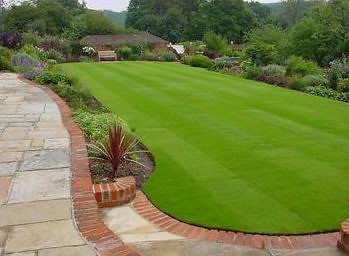
Free Lawn Care!
Check out this report from Connecticut by TONY SPINELLI.
Mishap leaves woman with free lawn care
Easton resident Dolly Curtis stands in front of her home holding a bill for over $500 that she received when her lawn was aerated by mistake. Curtis says that she is always receiving deliveries that were meant to go to another neighboring street and that she is happy about the most recent mistake as her lawn was aerated for free.
EASTON — Flat Rock Road resident Dolly Curtis woke up one morning last week to find hundreds of holes in her lawn, as if some mischievous gophers had dug in for a wild party.
But the holes weren't the work of rodents burrowing through her yard — they were ground-aeration holes, courtesy of a local lawn care company.
Some of the holes were big enough to poke a golf ball through, so that's just what Curtis did.
And she got a kick out of it.
"It looked like a bunch of moles had a fraternity party on my lawn," said Curtis, who was amused by the service despite not having ordered it.
The lawn service was meant for a home with the same street number as Curtis, but on Flat Rock Drive just around the block, a neighbouring street with a similar name.
And its not the first time the road/drive confusion has led to mix-ups, she said.
The lawn-service company, Smith's Lawn Specialist of Fairfield, which could not be reached for comment, did not insist Curtis pay the bill of $583 for doing work at the wrong address.
"This happens all the time. Once I woke up and found a portable toilet sitting on my lawn. I called my neighbor around the block who it was meant for and said, 'Hey, I'm sitting on your portable toilet and I'm reading your mail,' " she said jokingly.
She's even had her chimney flashed for free.
Curtis takes the holes in her lawn in stride.
"Hey, I'm going to have a better, nicer lawn now," said Curtis, the host of the cable access television show, "Dolly Curtis Interviews."
The same kind of misplaced deliveries also have happened to Lori Cocco, who lives across the street.
Cocco has received more misplaced deliveries than she can count.
Once, she got her piano tuned — for free.
"It doesn't bother me, but I don't think the people it was meant for were very happy," said Cocco, adding that what made the piano tuning unusual was that her keyboard was already in perfect tune and did not need adjustments.
The similarities between the names and numbers on Flat Rock Road and Flat Rock Drive may be confusing enough to trip up a delivery person, but they don't fool local police.
Emergency workers in town, such as the police, are familiar with the street-name mix-ups, and always double-check on calls to be certain which street they must visit, said Police Chief John Solomon.
Solomon said he has asked town officials not to designate new streets with names that are similar to names of existing streets to avoid further troubles.
Other streets in town also share similar names, such as Sport Hill Road and Sport Hill Parkway, said police Sgt. Will Spencer, as well as High Ridge Drive and High Ridge Place.
"It doesn't interfere with our work because we know about the street names," Spencer said.
"We've rejected street names three or four times because they were not dissimilar to other names," said Ed Nagy, the public works director.
Flat Rock Road is an old road, and Flat Rock Drive is newer, said First Selectman William Kupinse.
"It does tend to create confusion, and in modern times towns try to avoid that confusion. This problem may go back more than 25 years," Kupinse said.
The Planning and Zoning Commission and the town's assessor have authority over street names and numbers, respectively, he said.
Meanwhile, Curtis remains amused by the confusion.
"I was seriously considering keeping that portable toilet," she said with a laugh.
Mishap leaves woman with free lawn care
Easton resident Dolly Curtis stands in front of her home holding a bill for over $500 that she received when her lawn was aerated by mistake. Curtis says that she is always receiving deliveries that were meant to go to another neighboring street and that she is happy about the most recent mistake as her lawn was aerated for free.
EASTON — Flat Rock Road resident Dolly Curtis woke up one morning last week to find hundreds of holes in her lawn, as if some mischievous gophers had dug in for a wild party.
But the holes weren't the work of rodents burrowing through her yard — they were ground-aeration holes, courtesy of a local lawn care company.
Some of the holes were big enough to poke a golf ball through, so that's just what Curtis did.
And she got a kick out of it.
"It looked like a bunch of moles had a fraternity party on my lawn," said Curtis, who was amused by the service despite not having ordered it.
The lawn service was meant for a home with the same street number as Curtis, but on Flat Rock Drive just around the block, a neighbouring street with a similar name.
And its not the first time the road/drive confusion has led to mix-ups, she said.
The lawn-service company, Smith's Lawn Specialist of Fairfield, which could not be reached for comment, did not insist Curtis pay the bill of $583 for doing work at the wrong address.
"This happens all the time. Once I woke up and found a portable toilet sitting on my lawn. I called my neighbor around the block who it was meant for and said, 'Hey, I'm sitting on your portable toilet and I'm reading your mail,' " she said jokingly.
She's even had her chimney flashed for free.
Curtis takes the holes in her lawn in stride.
"Hey, I'm going to have a better, nicer lawn now," said Curtis, the host of the cable access television show, "Dolly Curtis Interviews."
The same kind of misplaced deliveries also have happened to Lori Cocco, who lives across the street.
Cocco has received more misplaced deliveries than she can count.
Once, she got her piano tuned — for free.
"It doesn't bother me, but I don't think the people it was meant for were very happy," said Cocco, adding that what made the piano tuning unusual was that her keyboard was already in perfect tune and did not need adjustments.
The similarities between the names and numbers on Flat Rock Road and Flat Rock Drive may be confusing enough to trip up a delivery person, but they don't fool local police.
Emergency workers in town, such as the police, are familiar with the street-name mix-ups, and always double-check on calls to be certain which street they must visit, said Police Chief John Solomon.
Solomon said he has asked town officials not to designate new streets with names that are similar to names of existing streets to avoid further troubles.
Other streets in town also share similar names, such as Sport Hill Road and Sport Hill Parkway, said police Sgt. Will Spencer, as well as High Ridge Drive and High Ridge Place.
"It doesn't interfere with our work because we know about the street names," Spencer said.
"We've rejected street names three or four times because they were not dissimilar to other names," said Ed Nagy, the public works director.
Flat Rock Road is an old road, and Flat Rock Drive is newer, said First Selectman William Kupinse.
"It does tend to create confusion, and in modern times towns try to avoid that confusion. This problem may go back more than 25 years," Kupinse said.
The Planning and Zoning Commission and the town's assessor have authority over street names and numbers, respectively, he said.
Meanwhile, Curtis remains amused by the confusion.
"I was seriously considering keeping that portable toilet," she said with a laugh.
Saturday, October 21, 2006
Lawn Care Basics
Check out this Report from the Lawn Care Institute:- Terry
Home Lawn Care Programs That Work
Another Report on Effective Turf Maintenance from the Lawn Institute
Having one of the best-looking and environmentally sound lawns in your neighborhood can be accomplished easier than you may think. You may still encounter some lawn "problems" during the year, but you can reduce their probability by faithfully following the lawn care programs outlined in this brochure. There are three (3) key parts to a good lawn maintenance program:
• Mowing
• Fertilizing
• Watering
They all work together to produce a quality lawn. Leaving one part out, or not following the plan to its optimum level, will give you less than the desired results.
A Mowing Program That Works
Many lawn care experts believe that a majority of our lawn care problems are a result of not mowing at the proper height…and not keeping our lawn mower blade sharpened throughout the mowing season. Each type of grass has its specific height for optimum performance. Mowing to keep the grass at its best growing height will increase your lawn's density and attractiveness, and reduce lawn care problems.
No matter the kind of grass you have, there is a simple "rule of thumb" to follow when mowing your lawn. Never remove more than one-third (1/3) of the leaf surface each time you mow. Leaf surface, or cutting height, refers to the length of grass above the soil. Cutting below the optimum height impedes root development, which is key to having a dense, healthy lawn.
Note: Increase the mowing height 1/2 inch for shady areas, immediately following a drought period, or when the grass has been weakened by insect injury or high traffic.
If you follow the "rule of thumb" on maintaining the optimum height and cut no more than 1/3 of the leaf surface, you can determine your cutting frequency. So much depends on weather conditions, when you've fertilized, and the amount of water the lawn has received. And remember - keep that lawn mower blade sharp! A dull blade will cause injury to the grass plant and produce stress…and increase the possibility of insect and disease problems.
When you use the "rule of thumb," you don't have to collect the grass clippings. They decompose quickly and put nutrients back into the soil. It's a built-in fertilization program every time you mow.
No - grass clippings do not create thatch! That's an old myth! Leaving the clippings on the lawn keeps them out of the landfills…and that's another environmental benefit!
As a last note, there are a number of new "mulching" mowers on the market that cut the clippings into very small pieces, which allows for quicker decay. These are not absolutely necessary to a proper mowing maintenance program, but if you're in the market for a new lawn mower, you should consider a mulching mower.
A Fertilization Program That Works
The goal of any fertilization program is to provide the lawn with the nutrients it needs for optimum growth. The most accurate way to find out those needs is to have the soil tested. Soil test kits and instructions are usually available at lawn and garden centers, and at better hardware stores. Soil test services and information are often available through your local County Extension office. If a soil test is not conducted, follow these general fertilization guidelines.
Most lawn experts agree that fertilizers with N (Nitrogen), P (Phosphorus), and K (Potassium) analysis ratios of 3-1-2 or 4-1-2 are acceptable for use on any lawn. Examples on the fertilizer bag that fit these ratios are: 12-4-8, 15-5-10, 21-7-14, 16-4-8, and 20-5-10. The experts also recommend that the fertilizer should have at least one-half of its Nitrogen (N) in a slowly soluble/slow-release form, i.e. natural organics, sulfur-coated urea, resin-coated urea, ureaformaldehyde, methylene urea, or I.B.D.U. Lawns fertilized with one of these slow-release forms of nitrogen tend to have better color, thickness, and reduced leaf growth.
Fertilizer application rates should be as low as possible and still produce a high quality lawn. If the amount of nitrogen (N-the first number of the analysis on the bag) is between 5 and 12, then the application rate should be 8 pounds per 1,000 square feet of lawn. If the number is between 12 and 18, the rate of application should be 6 pounds per 1,000 square feel. Anything over 19 should be applied at 4 pounds per 1,000 square feel of lawn. This is a good "rule of thumb," but always apply the fertilizer at the recommended rate listed on the bag.
The best time to fertilize your lawn is when it's actively growing and in need of nutrients. For Southern lawns, this means beginning the program just after spring green-up and stopping about two months before the average frost date in the fall. For Northern lawns, begin the program as the lawn begins to grow and green-up in the spring, then reduce applications as the weather gets hotter. When the cool weather returns in the fall, the lawn can again be fertilized. A late fall application, after the first frost, has been shown to increase lawn quality the following spring.
Fertilizer application dates and frequency are based primarily on which form of nitrogen the fertilizer contains. Those that have at least one-half of its nitrogen in slow-release form should be adequate for 6 to 8 weeks. If the lawn still has good color and is growing well at the end of this period, then delay the next fertilizer application a little longer.
Also, if you leave your clippings on the lawn, you are fertilizing the lawn almost on a continual basis…possibly extending the time period between commercially manufactured fertilizer applications. Lawn fertilization is truly the case of a little occasionally is good, but a lot at one time is bad for the grass.
A Watering Program That Works
The best lawns grow when they are watered heavily at infrequent intervals. On an average, the lawn needs about 1 inch of water a week, either from rain or irrigation during the growing season. This one-inch of water will normally soak the soil to a depth of 4 to 6 inches, which allows the water to reach deep into the root system.
Soil types vary in the speed at which water will soak in. If you know your basic soil type, use the following table as a general guide to watering.
Soil Type
Infiltration
Per Hour
Time Required
For 1 Inch To Soak In
Sand
2.0 inches
0.5 hours
Sandy loam
1.0 inches
1.0 hours
Loam
0.5 inches
2.0 hours
Silt loam
0.4 inches
2.25 hours
Clay loam
0.3 inches
3.3 hours
Clay
0.2 inches
5.0 hours
You must determine the rate of application of your sprinkler system to set up any irrigation program. An easy way to do this is to set out a series of straight-sided, flat-bottom cans if you have an underground sprinkler system or a couple of cans if you use a single sprinkler. Run the system 30 minutes and measure the water in the cans. With a little simple math, you can determine the length of time to apply one inch of water.
Watch for runoff during the watering period. It is very possible that your lawn will not be able to soak up the water as fast as your sprinkler is putting it on the lawn. If this occurs, shut it off and wait on-half hour, then turn it on again. Also, remember that sloped areas will have more tendency for runoff.
The best times to water your lawn are in the early morning or early evening when there is generally less wind and heat. The lease desirable times are in the heat of the afternoon, when water evaporates too quickly, and very late in the evening, which can cause the lawn to stay wet all night. This encourages disease development.
Over-watering is much worse than under-watering. Most grasses can live through reasonably long periods of drought. Water only when the soil is dry 4 to 6 inches below the surface. Use a screwdriver or other probe to determine dryness. Also, if the grass doesn't spring back up after walking on it…it's probably time to put another inch of water on the lawn.
The Lawn Institute
1855-A Hicks Road
Rolling Meadows, IL 60008
Home Lawn Care Programs That Work
Another Report on Effective Turf Maintenance from the Lawn Institute
Having one of the best-looking and environmentally sound lawns in your neighborhood can be accomplished easier than you may think. You may still encounter some lawn "problems" during the year, but you can reduce their probability by faithfully following the lawn care programs outlined in this brochure. There are three (3) key parts to a good lawn maintenance program:
• Mowing
• Fertilizing
• Watering
They all work together to produce a quality lawn. Leaving one part out, or not following the plan to its optimum level, will give you less than the desired results.
A Mowing Program That Works
Many lawn care experts believe that a majority of our lawn care problems are a result of not mowing at the proper height…and not keeping our lawn mower blade sharpened throughout the mowing season. Each type of grass has its specific height for optimum performance. Mowing to keep the grass at its best growing height will increase your lawn's density and attractiveness, and reduce lawn care problems.
No matter the kind of grass you have, there is a simple "rule of thumb" to follow when mowing your lawn. Never remove more than one-third (1/3) of the leaf surface each time you mow. Leaf surface, or cutting height, refers to the length of grass above the soil. Cutting below the optimum height impedes root development, which is key to having a dense, healthy lawn.
Note: Increase the mowing height 1/2 inch for shady areas, immediately following a drought period, or when the grass has been weakened by insect injury or high traffic.
If you follow the "rule of thumb" on maintaining the optimum height and cut no more than 1/3 of the leaf surface, you can determine your cutting frequency. So much depends on weather conditions, when you've fertilized, and the amount of water the lawn has received. And remember - keep that lawn mower blade sharp! A dull blade will cause injury to the grass plant and produce stress…and increase the possibility of insect and disease problems.
When you use the "rule of thumb," you don't have to collect the grass clippings. They decompose quickly and put nutrients back into the soil. It's a built-in fertilization program every time you mow.
No - grass clippings do not create thatch! That's an old myth! Leaving the clippings on the lawn keeps them out of the landfills…and that's another environmental benefit!
As a last note, there are a number of new "mulching" mowers on the market that cut the clippings into very small pieces, which allows for quicker decay. These are not absolutely necessary to a proper mowing maintenance program, but if you're in the market for a new lawn mower, you should consider a mulching mower.
A Fertilization Program That Works
The goal of any fertilization program is to provide the lawn with the nutrients it needs for optimum growth. The most accurate way to find out those needs is to have the soil tested. Soil test kits and instructions are usually available at lawn and garden centers, and at better hardware stores. Soil test services and information are often available through your local County Extension office. If a soil test is not conducted, follow these general fertilization guidelines.
Most lawn experts agree that fertilizers with N (Nitrogen), P (Phosphorus), and K (Potassium) analysis ratios of 3-1-2 or 4-1-2 are acceptable for use on any lawn. Examples on the fertilizer bag that fit these ratios are: 12-4-8, 15-5-10, 21-7-14, 16-4-8, and 20-5-10. The experts also recommend that the fertilizer should have at least one-half of its Nitrogen (N) in a slowly soluble/slow-release form, i.e. natural organics, sulfur-coated urea, resin-coated urea, ureaformaldehyde, methylene urea, or I.B.D.U. Lawns fertilized with one of these slow-release forms of nitrogen tend to have better color, thickness, and reduced leaf growth.
Fertilizer application rates should be as low as possible and still produce a high quality lawn. If the amount of nitrogen (N-the first number of the analysis on the bag) is between 5 and 12, then the application rate should be 8 pounds per 1,000 square feet of lawn. If the number is between 12 and 18, the rate of application should be 6 pounds per 1,000 square feel. Anything over 19 should be applied at 4 pounds per 1,000 square feel of lawn. This is a good "rule of thumb," but always apply the fertilizer at the recommended rate listed on the bag.
The best time to fertilize your lawn is when it's actively growing and in need of nutrients. For Southern lawns, this means beginning the program just after spring green-up and stopping about two months before the average frost date in the fall. For Northern lawns, begin the program as the lawn begins to grow and green-up in the spring, then reduce applications as the weather gets hotter. When the cool weather returns in the fall, the lawn can again be fertilized. A late fall application, after the first frost, has been shown to increase lawn quality the following spring.
Fertilizer application dates and frequency are based primarily on which form of nitrogen the fertilizer contains. Those that have at least one-half of its nitrogen in slow-release form should be adequate for 6 to 8 weeks. If the lawn still has good color and is growing well at the end of this period, then delay the next fertilizer application a little longer.
Also, if you leave your clippings on the lawn, you are fertilizing the lawn almost on a continual basis…possibly extending the time period between commercially manufactured fertilizer applications. Lawn fertilization is truly the case of a little occasionally is good, but a lot at one time is bad for the grass.
A Watering Program That Works
The best lawns grow when they are watered heavily at infrequent intervals. On an average, the lawn needs about 1 inch of water a week, either from rain or irrigation during the growing season. This one-inch of water will normally soak the soil to a depth of 4 to 6 inches, which allows the water to reach deep into the root system.
Soil types vary in the speed at which water will soak in. If you know your basic soil type, use the following table as a general guide to watering.
Soil Type
Infiltration
Per Hour
Time Required
For 1 Inch To Soak In
Sand
2.0 inches
0.5 hours
Sandy loam
1.0 inches
1.0 hours
Loam
0.5 inches
2.0 hours
Silt loam
0.4 inches
2.25 hours
Clay loam
0.3 inches
3.3 hours
Clay
0.2 inches
5.0 hours
You must determine the rate of application of your sprinkler system to set up any irrigation program. An easy way to do this is to set out a series of straight-sided, flat-bottom cans if you have an underground sprinkler system or a couple of cans if you use a single sprinkler. Run the system 30 minutes and measure the water in the cans. With a little simple math, you can determine the length of time to apply one inch of water.
Watch for runoff during the watering period. It is very possible that your lawn will not be able to soak up the water as fast as your sprinkler is putting it on the lawn. If this occurs, shut it off and wait on-half hour, then turn it on again. Also, remember that sloped areas will have more tendency for runoff.
The best times to water your lawn are in the early morning or early evening when there is generally less wind and heat. The lease desirable times are in the heat of the afternoon, when water evaporates too quickly, and very late in the evening, which can cause the lawn to stay wet all night. This encourages disease development.
Over-watering is much worse than under-watering. Most grasses can live through reasonably long periods of drought. Water only when the soil is dry 4 to 6 inches below the surface. Use a screwdriver or other probe to determine dryness. Also, if the grass doesn't spring back up after walking on it…it's probably time to put another inch of water on the lawn.
The Lawn Institute
1855-A Hicks Road
Rolling Meadows, IL 60008
Friday, October 20, 2006
Fellow Lawn Enthusiasts
Hi everyone, welcome to this site for Lawn enthusiasts. I intend to post up to the minute Information, Tips, Suggestions and Comments dedicated to the Care and Maintenance of your best friend in the garden - the Lawn.
Check back later
Terry
Check back later
Terry
Subscribe to:
Posts (Atom)
My Ficus Ginseng Plant!
Cool or What?